
Have you ever needed to explain to someone how to register for an online service or how to use a digital platform? Clear communication, both written and spoken, is essential in digital interactions. In this chapter, you will learn how to give clear instructions, clarify information, and write procedure texts, especially related to digital services. These skills will help you communicate more effectively in everyday life and in the digital world.
Clear communication is the foundation of effective conversation. In this unit, you will explore how to clarify instructions, ask insightful questions, and respond with confidence to ensure you truly understand and connect with others.
Mission 1. A Journey Through Digital Texts
You will read through three different materials related to digital communication: a news article, a poster, and a monologue. After reading each material, you will answer the questions that follow.
Why Securing Your Social Media Accounts is More Important Than Ever
With increasing cyber threats, securing your social media accounts has become a top priority. Recently, a local teenager’s Instagram account was hacked, and personal photos, private messages, and account details were shared without her consent. This incident has raised awareness about the importance of securing social media accounts. Experts emphasize the importance of taking simple but effective steps to protect your personal information online. Step 1: Use a strong password that combines uppercase and lowercase letters, numbers, and symbols. Step 2: Enable two-factor authentication (2FA) to add an extra layer of security. Step 3: Regularly review and update your privacy settings to control who can access your information. Step 4: Be cautious when clicking on links from unknown sources or suspicious emails. By following these simple steps, you can ensure your social media accounts are protected from hackers and unauthorized access.
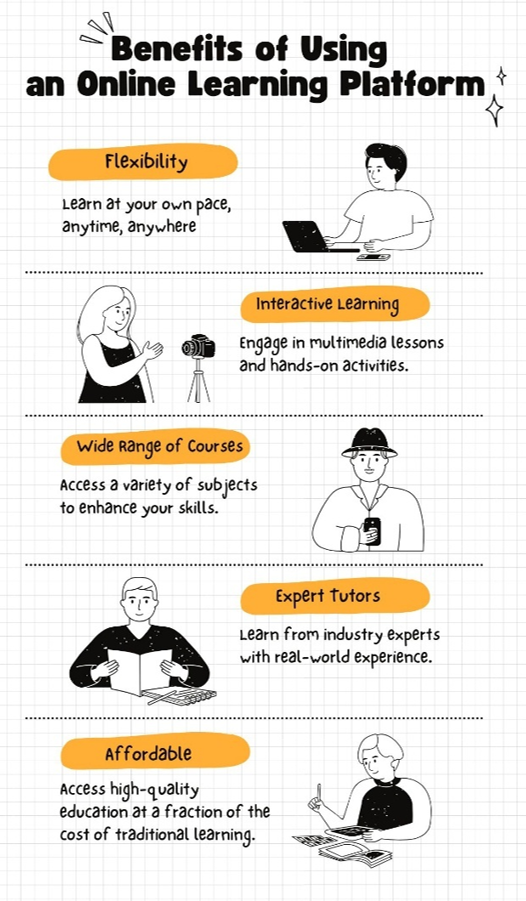
Questions: 1. In your opinion, how important is it to take precautions for your social media security? Why? 2. Why is enabling two-factor authentication (2FA) important for account security? 3. How can reviewing and updating privacy settings help protect your account? 4. Have you used any online learning platforms? What was your experience like? Would you recommend them to others? 5. What do you think are the main advantages or disadvantages of online learning compared to traditional in-person education? 6. Why is the boy frustrated about not being able to access his account? 7. What might be some reasons why the account isn't opening? 8. How can the boy resolve this issue to get back into his account? 9. Have you ever had trouble accessing a social media account or online platform? How did you deal with it? 10. What advice would you give to someone who is struggling to access their social media account?
Mission 2. Exploring Online Experiences
In this activity, you will share your experiences using digital platforms. Look at the platforms in the picture and think about how you’ve used them—whether for communication, learning, or entertainment. Reflect on their impact, any challenges you faced, and be ready to share your thoughts. 1. Do you have any of these social media platforms? If so, which one do you use the most? 2. What do you usually do when you log into these platforms and how often do you use it? 3. Have you ever learned something new from a social media platform? If yes, what was it? 4. Do you know how to post a picture or video on these platforms? Can you walk me through the steps? 5. How do you adjust your privacy settings on any of these platforms? What options do you have to control who sees your posts?
Mission 3. Practicing Clear Instructions
In this mission, you will practice giving clear instructions, explaining details, and confirming understanding. Follow the steps carefully and complete each task to sharpen your communication skills. Anna: Hey, John! I’m really excited about the group project we’re doing, but I’m a little confused about the first steps. Can you remind me what we need to do? John: Of course! So, first, we need to choose a topic for the project. After that, we’ll divide the tasks between the group members. Anna: Alright, that makes sense. But, when you say "choose a topic," do we have a specific area we should focus on? Are there any guidelines for that? John: Oh, good question! We can choose anything related to modern technology, but it should be something we can easily research. For example, you could look into the impact of social media on communication or something like how AI is changing healthcare. Anna: Okay, so we have to stick to modern technology. I was a little unsure because the instructions were a bit broad. Can we pick a subtopic under that, or should it be something more general? John: We can definitely pick a subtopic as long as it’s relevant to the theme. For instance, if we choose AI, we could narrow it down to how AI is used in self-driving cars, or AI in medical diagnosis. The key is to make sure we can present enough research. Anna: Got it! So, it has to be related to modern technology, but we can focus on a specific aspect, like AI in healthcare. That helps a lot! Now, once we pick the topic, what’s next? What’s the timeline? John: Right. Once we choose the topic, we’ll divide the work. Each person will research their part and then come together for a group discussion. After that, we have to create a PowerPoint presentation. It’ll be due in two weeks. Anna: Okay, I understand now. So, we’ll have a week to research individually, and then we’ll meet up to discuss everything and put it into the presentation, right? John: Exactly! We need to make sure that by the time we meet up, we all have enough information to contribute. Oh, and don’t forget—we need to include at least three sources for each part of the research. Anna: Got it! So, each part should have three sources. I’ll make sure I gather enough research. Once we put the presentation together, do we need to practice presenting it as well? John: Yes, that’s the plan. After we finish the slides, we’ll rehearse our parts together. We need to be prepared to present it in front of the class. Anna: Thanks for clearing that up, John! I think I have everything now. So, to summarize: we pick a specific topic related to modern technology, research it with at least three sources, and then create a PowerPoint to present to the class in two weeks. Is that right? John: Yes, that’s exactly it! You’ve got it. Just make sure you’re on track with the research and bring everything we discussed to the next meeting. Anna: Alright, I’m ready to get started. Thanks again for explaining everything. I feel much more confident now! John: No problem! Let me know if you need help with anything else. Good luck with your research! Questions: 1. How did John respond to Anna’s clarification about picking a subtopic? 2. What did John say to provide more detail when explaining the choice of a topic? 3. How did Anna confirm her understanding of the task after hearing the instructions? 4. What did Anna say to summarize and confirm that she understood the project requirements? 5. How did John confirm that Anna understood the task correctly?
Clarifying instructions or information means asking questions or making statements to ensure that you fully understand what has been said. It helps clear up confusion or ambiguity, making sure you are on the right track. Common phrases used for clarification: "What do you mean by…" / "Could you explain that again?" / "Do you mean…" / "Could you clarify…" / "I don’t quite understand, can you be more specific?" Further explanation is used to provide additional details or clarify a point that has already been made. This helps make complex ideas simpler and ensures that others grasp all aspects of a concept or instruction. Common phrases for further explanation: "What I mean is…" / "Let me clarify further…" / "To put it simply…" / "In other words…" Expressions to say that you understood are used to confirm that you have received and comprehended the information provided. These are essential in communication because they reassure the speaker that the message has been understood, and they allow the conversation to continue smoothly. Common expressions to say that you understood: "Got it!" / "I see." / "So, if I understand correctly…"
Mission 4. Practicing Clear Instructions
In this mission, you will practice giving clear instructions, explaining details, and confirming understanding. Follow the steps carefully and complete each task to sharpen your communication skills. 1. Read the instructions carefully, then choose one instruction. 2. Write down clarification questions you would ask if you were unsure about any details. 3. After you've written your clarification questions, you’ll now expand the instructions. Write a more detailed explanation of the instruction or scenario, using expressions for further explanation. 4. Now, confirm your understanding of the instruction. Paraphrase what you think you need to do, and use expressions to confirm understanding. 5. After completing the task, take a few moments to reflect on your answers. Ask yourself: "Did my clarification questions address the most important details?" "How did expanding the explanation help me understand the task better?" "Was I able to confirm the instruction accurately?" Scenarios: Scenario 1: Preparing a Presentation — You have been asked to prepare a 10-minute presentation on the impact of climate change. The presentation should include statistics, real-world examples, and a conclusion. Scenario 2: Organizing a Class Event — Your class has been assigned the task of organizing a fundraising event. You need to prepare a plan that includes the event’s theme, venue, date, activities, and how to raise funds. You have been given only the general idea, and you need more details. Scenario 3: Writing an Email to a Teacher — You have to write an email to your teacher explaining why you couldn’t attend a class last week. You are unsure what to mention in the email and want to make sure your message is polite, clear, and includes all the necessary details. Example: You need to submit a report by Friday. It should cover market trends and consumer behavior. Clarification questions: "What is the exact length of the report?" "Are there any specific sources I should include?" "How should I format the report?" Expressions for further explanation: "In more detail, you should write about the most recent market trends from last quarter and include two charts to support your analysis of consumer behavior." Expressions to confirm understanding: "Just to make sure I got it right, I need to write a 1,500-word report by Friday, covering the market trends from last quarter and consumer behavior, with at least two charts."
Mission 5. Complete the Conversation
Read the following dialogue carefully and fill in the blanks with the appropriate expressions. Use the expressions you have learned about clarification, further explanation, and confirming understanding. Choose the best expression that fits each blank. Andrew: Hey, Jessy! I’ve been thinking about the digital transformation project, and I’m a bit confused about the guidelines. Can you remind me exactly what we're supposed to do? Jessy: Of course! The first step is to ………………………………………. (1. Ask for clarification about what "choosing a topic" means). We need to choose a topic related to digital transformation or technology, but it has to be something we can really explore in-depth and find enough research material on. Andrew: Right, that makes sense. But do we have any restrictions on what the topic can be, or is it really open to anything in the field of digital technology? Like, could I focus on social media platforms, or does it have to be more specific? Jessy: Good question! We can choose a specific aspect of digital life, but it should be narrow enough to allow for deep analysis. ………………………………………. (2. Give an example to explain what a "narrow topic" could look like). For example, instead of just talking about social media in general, you could focus on how Instagram influences youth culture or how TikTok is reshaping marketing strategies. Andrew: Ah, okay, so we need to ………………………………………. (3. Clarify that we need to narrow the topic down). But once we’ve chosen our topic, what’s next? Are we supposed to work individually on different parts, or should we all focus on the same thing? Jessy: We’ll actually be working in groups, but each person will focus on different aspects of the same topic. For example, if we’re looking at how social media impacts society, one person could focus on its effects on mental health, while someone else could cover its role in modern marketing. ………………………………………. (4. Explain how the research will be divided up among the group members) so we can put everything together later. Andrew: Got it. So, once we’ve done our individual research, what’s the next step? Do we meet up to discuss everything before we start creating the presentation? Jessy: Exactly! After gathering all our research, we need to meet up and ………………………………………. (5. Confirm how the group will organize the research and plan the presentation). We’ll decide what information goes into the presentation, how to structure it, and who will present each section. We’ll also need to choose the format—PowerPoint, Prezi, or something else? Andrew: Okay, that makes sense. And how do we ensure that our research is credible? I don’t want to use unreliable sources. Jessy: Good point! We need to make sure all our sources are trustworthy. ………………………………………. (6. Explain how to ensure the sources are credible and why it’s important). We can use peer-reviewed journals, industry reports, or reputable tech news sources. Also, make sure to check the publication date—anything older than five years might be outdated in the fast-evolving digital world. Andrew: Got it! I’ll focus on finding recent articles from tech journals. So, just to confirm everything, we’re going to pick a narrow topic related to digital transformation, research it individually, then meet to discuss and combine our findings, and finally create a presentation with reliable sources. Is that right? Jessy: Yes, exactly! ………………………………………. (7. Confirm the understanding and reassure Andrew that the plan is correct). We will each present our part, and then we’ll review everything together before finalizing the slides. We have two weeks, so let’s stay on top of the timeline. Andrew: Okay, I think I’m clear now. Thanks for going over everything with me! …………………………………. (8. Express understanding and confidence that everything is clear now). I’ll get started on my part right away. Jessy: No problem! I’m glad we could clear that up. If you need help with anything, just let me know. Let’s make this project a success!
Mission 6. Complete the Conversation
Read the following dialogue carefully then answer the following questions correctly. Jere: Hey Bella, Dylan, I’ve been really struggling with managing my time lately. I keep putting off tasks until the last minute, and it’s starting to affect my grades. Do you have any tips on how to handle this better? Bella: I totally get you, Jere. "Procrastination is the art of keeping up with yesterday." We all have a tendency to put things off, but if we keep doing that, we’ll end up stressing ourselves out even more in the future. Dylan: Yeah, I’ve been there too. "A stitch in time saves nine." If you tackle a small problem right away, it won’t turn into something bigger. We need to take action before it gets out of hand. Jere: That’s true. But sometimes, it feels like there’s so much to do, and I don’t even know where to start. How do you manage to stay on top of things? Bella: I think the key is "Don’t put off until tomorrow what you can do today." If you break tasks into smaller chunks and get started right away, it’ll feel less overwhelming. Dylan: Exactly! Also, "The early bird catches the worm." If you start working on things early, you get ahead of the game and have less to worry about later. Jere: I’ve heard that before. But sometimes, I just get distracted and waste time on things that aren’t important. How do you avoid that? Bella: It helps to stay focused. "Keep your eye on the prize." Stay motivated by reminding yourself of the end goal, whether it’s getting a good grade or finishing a project. If you focus on your final objective, it’s easier to stay on track. Dylan: And remember, "A bird in the hand is worth two in the bush." Don’t chase after distractions when you already have something important to do. If you finish the current task, you’ll be free to relax or enjoy something else later. Jere: You guys are right. I think I just need to prioritize better. "Time is money." I’ve been wasting too much time, and it’s costing me. I’ll try to focus and get things done earlier. Bella: Exactly! "Well begun is half done." Once you start, the hardest part is over. Let’s make a plan and stick to it so we can finish our tasks early and have time to relax later. Dylan: Yeah, let’s do it! "Many hands make light work." We can help each other stay on track, and that’ll make things go a lot faster. Jere: Thanks for the advice, guys. I feel a lot more motivated now! I’ll start planning my tasks better and not wait until the last minute. Questions: 1. What is the main topic of the dialogue? 2. Which proverb in the dialogue do you think is most relevant to your own study or work habits? Why? 3. How do the characters in the dialogue address the issue of procrastination? 4. Did you know the meaning of any of the proverbs used in the dialogue? Which one(s)? 5. "Procrastination is the art of keeping up with yesterday.": …………………………………………………….. 6. "A stitch in time saves nine.": ………………………………………………………………………………… 7. "Don’t put off until tomorrow what you can do today.": ……………………………………………………… 8. "The early bird catches the worm.": ………………………………………………………………………………… 9. "Keep your eye on the prize.": ……………………………………………………………………………………….. 10. "A bird in the hand is worth two in the bush.": ……………………………………………………………………… 11. "Time is money.": ………………………………………………………………………………………………………….. 12. "Well begun is half done.": ……………………………………………………………………………………………… 13. "Many hands make light work.": ……………………………………………………………………………………….
Proverbs are short, common sayings or phrases that express traditional wisdom, truths, or life lessons. They are often metaphorical in nature and have been passed down through generations to offer guidance in various aspects of life. Proverbs are used to convey simple yet profound ideas in a memorable way, usually with a message about human nature, relationships, or behavior. Example: Sophia: I’ve been putting off this research project for so long. I don’t know where to start, and now I’m worried I won’t finish on time. Liam: Sophia, don’t stress. Remember, "A journey of a thousand miles begins with a single step." You just need to start with one small task, and the rest will follow. Sophia: You’re right. I’ve been avoiding it because I’m overwhelmed, but breaking it down into smaller tasks sounds manageable. I’ll start with the outline. Liam: Exactly! Once you begin, everything else will seem less daunting. You’ve got this! Explanation: "A journey of a thousand miles begins with a single step." Means, even the largest and most overwhelming tasks can be accomplished by starting with one small step. Taking the first action is often the hardest, but it leads to progress.
The global volume of data traffic surpassed 1 zettabyte in 2016, marking the onset of the "Zettabyte Era." This immense data flow is largely driven by increased video streaming, mobile device usage, and higher broadband speeds.
Mission 7. Find and Reflect on Proverbs
Your mission is to discover meaningful proverbs, write them down, and uncover their wisdom. Follow the instructions below to complete this mission! 1. Think of at least three proverbs that you have heard before. These could be ones that you’ve heard in conversations, in books, or from other sources like films or songs. 2. If you can’t recall any, feel free to search for proverbs online. You can use websites, books, or even social media for inspiration. Just make sure to choose proverbs that are meaningful or relevant to you. 3. Write down the three proverbs you have found or remembered. 4. For each proverb, write a short explanation of what it means. Example: Proverb: "The early bird catches the worm." Meaning: This means that those who start early or take initiative have an advantage. It’s often used to encourage people to start working on tasks ahead of others. Personal Reflection: I find this proverb especially helpful in my studies. I always feel more productive when I start my homework early rather than waiting until the last minute.
Gratis — tolong sebarkan
Materi dan latihan di sini bisa dipakai siapa saja tanpa membayar dan tanpa mendaftar. Aplikasi Fitri Learning membawa semuanya ke HP, lengkap dengan nilai dan pembahasan, dan jalan tanpa internet setelah diunduh sekali.
Gratis, tanpa akunUnduh aplikasinya → Ilmu yang bermanfaatBagikan ke WhatsApp