
Communication is not only about words but also about understanding and explaining important information. In this unit, you will learn how to express warnings thoughtfully and interpret visual data accurately, helping you share information in a clear and meaningful way.
Mission 1. Warning in Words
Before learning more about giving warnings, read and comprehend the dialogue carefully. Pay close attention to how each speaker expresses a warning, including the words and tone they use. Analyze how the warnings are given and their impact on the conversation. After reading, answer the comprehension questions to demonstrate your understanding. Two students, Raka and Siti, are walking home after school. They take a shortcut near a construction site and notice a large warning sign on an electrical fence.
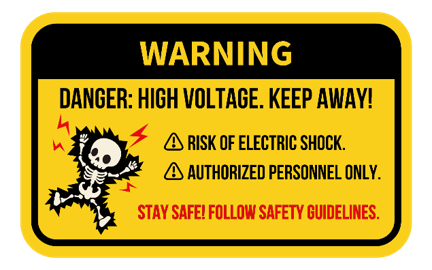
Raka: "Hey, Siti, look at that sign! It says 'WARNING: DANGER – HIGH VOLTAGE. KEEP AWAY!' We should be careful around here." Siti: "Yeah, I see it. Risk of electric shock? That sounds serious! We’d better not go anywhere near that fence." Raka: "Exactly. I wouldn’t risk it if I were you. High-voltage electricity is no joke. Even touching the fence could be deadly!" Siti: "It also says 'Authorized personnel only.' That means only workers or electricians are allowed near it. We have no business being here." Raka: "You’re right. But look over there! Some kids are playing with a ball near the fence. What if the ball rolls too close?" Siti: "Oh no! We should warn them before something bad happens. They might not have seen the sign." Raka: (Calling out to the kids) "Hey! Be careful! Stay away from that fence—it’s dangerous!" One of the kids: "Why? We’re just playing. What’s the big deal?" Siti: "Didn’t you see the sign? High voltage means electricity can jump through the air even if you don’t touch the wires directly. You could get seriously hurt!" One of the kids: (Looking at the sign) "Oh… I didn’t know that. I thought it only shocked you if you touched the wires." Raka: "Nope! Better safe than sorry. You should move farther away from the fence just in case." Siti: "Yeah, and if your ball ever goes near the fence, never try to get it yourself. Ask an adult or a worker to help instead." One of the kids: "Okay, thanks for the warning! We’ll play somewhere else." Raka: "Good choice! It’s always better to follow safety guidelines than take risks." Siti: "Exactly! Warnings exist for a reason. Let’s go before we get too close ourselves!"
Expressions of warning are phrases used to alert someone about a possible danger, risk, or problem. They help prevent accidents, harm, or mistakes by giving cautionary advice in different situations. Warnings are essential because they help prevent harm or danger by allowing people to avoid accidents. They also guide safe behavior through rules and caution signs that ensure safety in daily life. Additionally, warnings demonstrate care and responsibility, as informing others about potential risks helps protect them. Lastly, they prepare people for possible consequences by alerting them to what might happen if safety measures are not followed. Types of warning: Mild Warnings (Polite & Indirect) — used when the situation is not urgent but still requires attention. e.g. "You might want to be careful around that area." / "I wouldn’t do that if I were you." / "It’s best to avoid that road; it can get really slippery." Direct Warnings (Clear & Firm) — used when the situation requires immediate caution but is not life-threatening. e.g. "Be careful!" / "Watch your step!" / "Stay back! That’s not safe." Urgent Warnings (Serious & Life-Threatening Situations) — used when there is an immediate danger and a quick reaction is needed. e.g. "Stop! That’s dangerous!" / "Watch out! The car is coming!" / "If you’re not careful, you could get electrocuted!" Responding to warning: Acknowledging the warning. Asking for more information. Reassuring the person who gave the warning. How to Give an Effective Warning: Be clear and direct – The listener should understand the danger immediately. Adjust your tone based on urgency – Be calm for mild warnings, but urgent for serious dangers. Give reasons if necessary – Explain why something is dangerous. Use gestures or signs – Pointing at a danger can help emphasize the warning.
Mission 2. Signals of Safety
Read the monologue and dialogue carefully, paying close attention to any phrases that indicate a warning. Identify the danger or risk being mentioned and analyze its significance. Then, complete the analysis table by summarizing the warning and explaining why following the warning is important. Monologue 1: "A Risky Shortcut" "I know taking the shortcut through the old bridge seems like a good idea, especially when we’re in a hurry. But trust me, it’s not worth the risk. Last week, I saw a crack running across the wooden planks, and some parts are already missing. The water underneath is rough, and if someone were to fall… I don’t even want to imagine it. I’ve heard that a few people have slipped there before, and some even got hurt. If I were you, I’d take the longer, safer path. It may take more time, but at least we’ll get there in one piece." Monologue 2: "Handle with Care" "I know you’re excited to use the new chemical set, but you need to be extremely careful. Some of these substances are not only strong but also highly reactive. Even a small mistake, like mixing the wrong chemicals or touching them with bare hands, can cause burns or dangerous fumes. Always wear gloves, use safety goggles, and work in a well-ventilated space. And please, never eat or drink anything near the table while working with these! One small accident could turn into something serious." Dialogue 1: "The Mysterious Sign" Two friends, Lisa and Budi, are hiking in a forest when they see a sign ahead. Lisa: "Hey, look at that sign! It says something, but the paint is faded." Budi: "Hmm, I can still read part of it… 'DANGER: Do Not…' and something about 'animals'?" Lisa: "Wait a second… do you think this means wild animals are around?" Budi: "Could be. I’ve heard that some parts of this forest have aggressive monkeys or even snakes." Lisa: "Great. So, what should we do? Should we keep walking?" Budi: "I don’t think so. If this is a warning, we shouldn’t ignore it. Let’s stay alert, avoid making loud noises, and definitely not try to feed any animals we might see." Dialogue 2: "A Simple Mistake" In a science lab, two students, Johan and Sarah, are about to start an experiment. Johan: "Alright, I think we’re ready. Let’s pour this liquid into the other one and see what happens!" Sarah: "Wait! Are you sure we’re supposed to mix those? The teacher said some chemicals react dangerously." Johan: "Relax, what’s the worst that could happen?" Sarah: "That’s exactly the attitude that gets people hurt! Look, this one has a warning label that says 'Do not mix with acids.' We should check the experiment sheet first." Johan: "Fine, fine. You’re right. Better safe than sorry, I guess."
| What is the warning about? | Why is this warning important? | |
|---|---|---|
Mission 3. Warning Wise: Do’s and Don’ts in Action!
Review the dialogue and monologue from the previous activity and identify the warnings given. Create a list of do’s (safe actions to follow) and don’ts (risky actions to avoid) based on the warnings expressed. Ensure your list accurately reflects the guidance provided in the conversation.
| Do’s (What should you do?) | Don’ts (What should you avoid?) | |
|---|---|---|
Mission 4. Decode the Data Critically!
Carefully examine the provided graph, "Social Media Usage in SMA 17 Merdeka," analyze the data, and identify key patterns or trends. Then, answer the analysis questions by selecting the correct response.
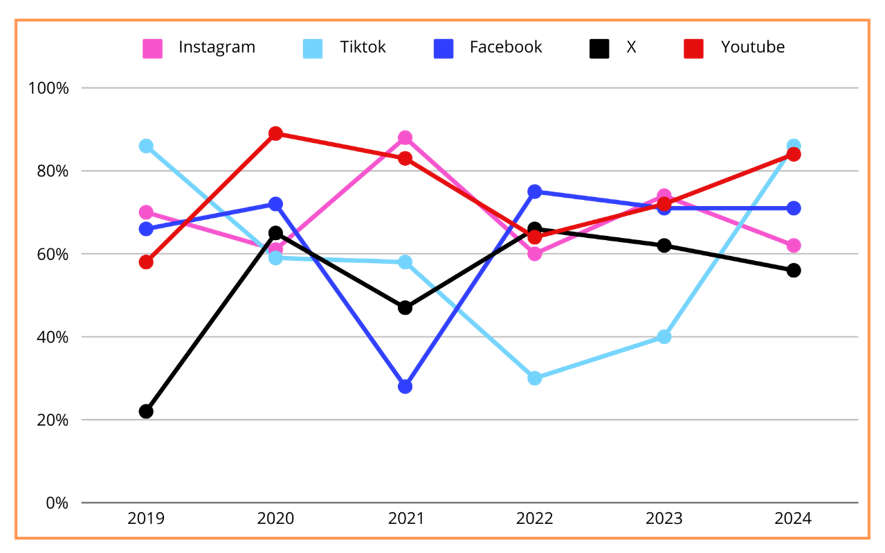
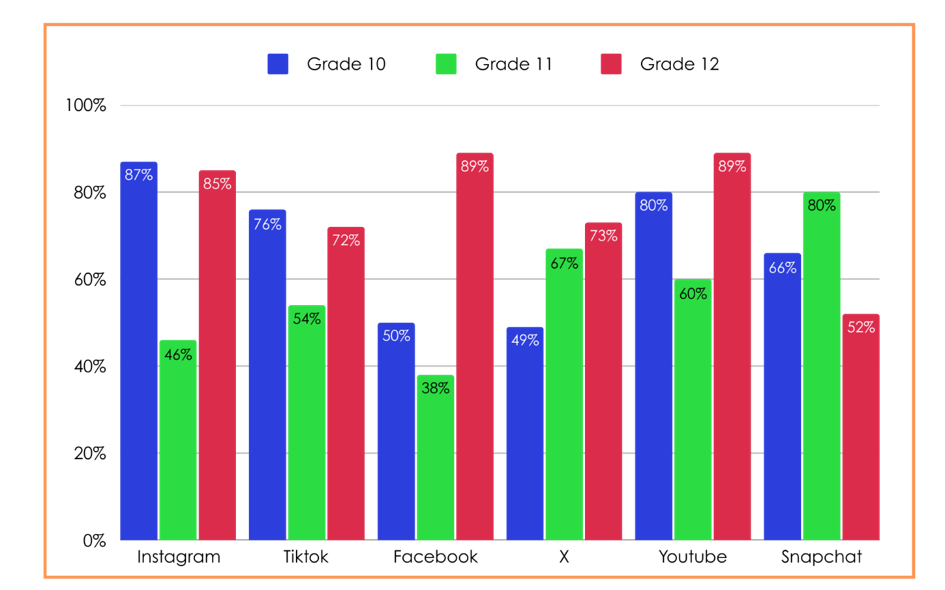
Questions: 1. Which social media platform is the most popular among students in SMA 17 Merdeka? 2. What possible reasons could explain why social media usage varies across different grades? 3. What trend do you notice in social media usage from 2019 to 2024?
Mission 5. The Smart Choice
Read the dialogue carefully and comprehend how warnings and advice are given in the conversation based on the data in the previous mission (mission 3). Identify key phrases used to express warnings and suggestions. Then, complete the table by writing the warnings, advice, and listing the do’s (safe actions) and don’ts (risky actions) based on the dialogue. Four students—Denis, Adit, Susan, and Dewi—are discussing their school project about social media usage among students in SMA 17 Merdeka. They are analyzing two sets of data: social media usage by grade and trends over the years. Denis: "Alright, let’s go over the data. Based on our findings, Instagram and TikTok are the most used platforms among students. However, Facebook usage is significantly lower, especially among Grade 10 students." Adit: "That makes sense. If you look at the trend, Facebook seems to be declining in popularity. I wouldn’t be surprised if its usage keeps decreasing in the next few years. Meanwhile, TikTok’s popularity has been increasing rapidly." Susan: "Yes, but we need to be careful when interpreting this data. Even though TikTok has the highest percentage among Grade 10 students, it doesn’t mean it’s the most used platform overall. If we compare all grades together, YouTube actually has the highest consistent usage." Dewi: "That’s a good point. It’s important to consider the overall pattern instead of just looking at individual grade levels. If we look at the second dataset, we can see that from 2019 to 2024, YouTube has remained stable, while Instagram and TikTok have seen significant increases." Denis: "Exactly! However, we should also watch out for any misleading conclusions. Just because a platform is growing now doesn’t mean it will always continue to rise. Trends can change, and a new platform might emerge that replaces TikTok or Instagram." Adit: "That’s true. We should also think about external factors. For example, during the pandemic, people spent more time online, which could explain the rapid rise in TikTok usage. Now that schools are fully open, will this trend continue?" Susan: "Good observation. Another key point we should highlight is the drop in Facebook usage. Older students use it more than younger students, but even in Grade 12, the numbers are still low. This suggests that Facebook might not be relevant to our generation anymore." Dewi: "So, what do we conclude from this? Should we predict that TikTok will replace Instagram as the most popular platform?" Denis: "Not necessarily. The data suggests that TikTok’s growth is strong, but Instagram is still widely used across all grades. It’s possible that both platforms will continue to dominate in different ways. We should phrase our conclusion carefully to avoid overgeneralization." Adit: "Good idea. And we should also include a warning about digital addiction. If students spend too much time on social media, it could affect their focus and productivity." Susan: "Yes! We should add a cautionary note: Spending hours on social media can be harmful, and students need to manage their screen time wisely." Dewi: "Great! So, we’ll summarize our findings, highlight the trends, and include a warning about responsible social media use. That way, we present a complete and balanced analysis."
| Warning | Advice |
|---|---|
| Do’s (safe action) | Don’ts (risky action) |
|---|---|
When describing a diagram or graph, it's important to analyze the key information and communicate it clearly. Here are some important points to consider: Structure of describing a diagram or graph: Introduction: it is important to clearly explain the diagram's purpose and main topic, including the type of graph or diagram (e.g., bar graph, line graph, pie chart, table, or flowchart) and what it represents. It should also set the context, such as the time period covered and the source of the data. Body: should provide a detailed analysis of the key information. It should include: Trends and Patterns (explain increases, decreases, fluctuations, or stability), Comparisons (compare categories effectively), and Specific Data Points (support observations with actual figures or percentages when available). Conclusion (concluding sentence): should summarize the overall trend or key message of the graph or diagram, including final insights, predictions, or significance of the data. Language feature (Tenses): Present Simple – for general facts and descriptions ("The chart shows…") Past Simple – for completed actions in the past ("Sales dropped in 2020.") Present Perfect – for trends that started in the past and continue now ("The number of users has increased steadily.") Future Simple – for predictions ("This trend will likely continue.")
Mission 6. Describing Diagrams and Graphs
In this activity, you will practice describing a diagram/graph using a clear and structured approach. Follow the steps below to organize your description effectively: Analyze the Diagram/Graph: - Identify the title, labels, and key trends (e.g., increases, decreases, fluctuations). - Note important data points (highest and lowest values, patterns across categories, etc.). - Consider any external factors that might influence the data (e.g., time, demographics, events).
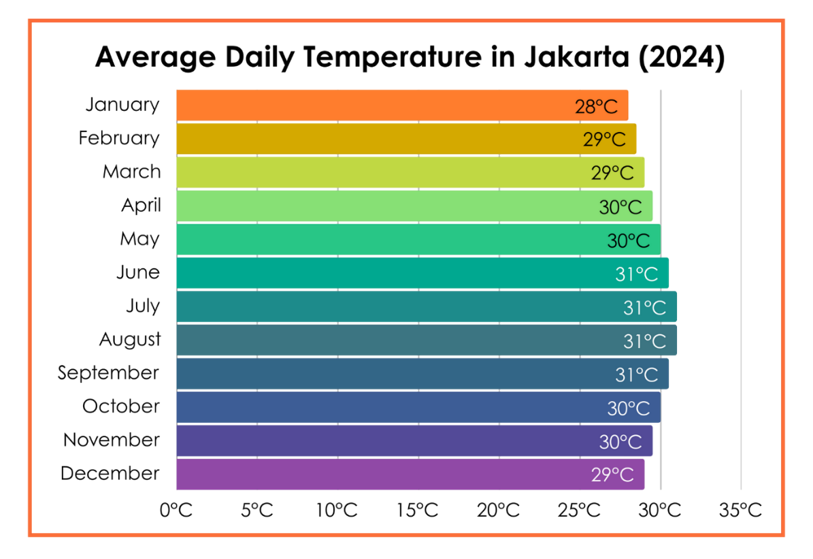
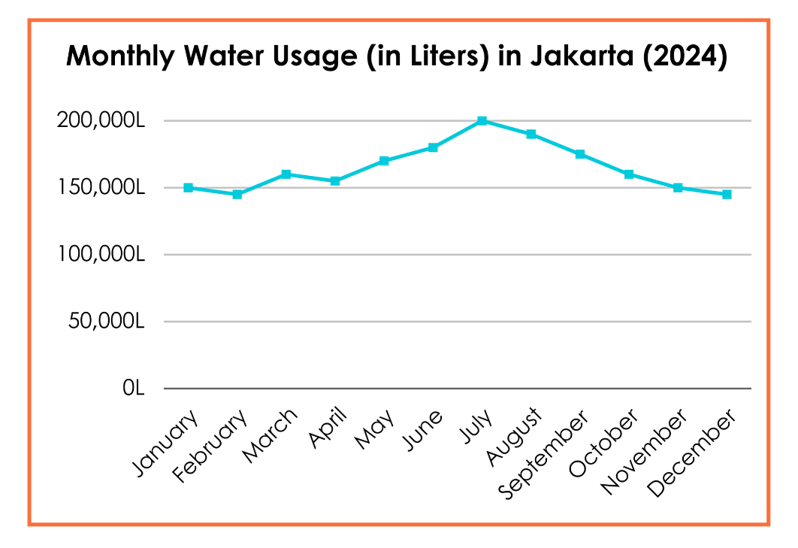
Write Your Description Following This Structure: - Introduction: Start by introducing the diagram or graph. Describe what it represents and what kind of data is shown (e.g., trends, comparisons, or categories). Mention the time frame or any relevant context if necessary. - Body: Highlight the key details. Discuss the main trends, significant changes, or comparisons. Use specific data points to support your observations (e.g., numbers, percentages, or trends). Be clear and organized as you explain the most important features of the diagram/graph. - Conclusion/concluding sentences: End with a brief conclusion. Summarize the overall trends or key points that stand out from the diagram or graph. You can also provide a final observation or implication based on the data. Write Your Description: - Follow the structured approach (Introduction, Body, Conclusion). - Use specific details from the graph and ensure your description is clear and logical.
Gratis — tolong sebarkan
Materi dan latihan di sini bisa dipakai siapa saja tanpa membayar dan tanpa mendaftar. Aplikasi Fitri Learning membawa semuanya ke HP, lengkap dengan nilai dan pembahasan, dan jalan tanpa internet setelah diunduh sekali.
Gratis, tanpa akunUnduh aplikasinya → Ilmu yang bermanfaatBagikan ke WhatsApp