
This unit focuses on analyzing descriptive texts, distinguishing between facts and opinions, and mastering the use of passive voice to clearly convey ideas and identify actions in various contexts.
Mission 1. Exploring Famous Places in Indonesia
Below, you will find descriptions of three famous places in Indonesia: Borobudur Temple, Prambanan Temple, and Bali. Read each description carefully to understand the key facts, opinions, and important details about each place.
The Borobudur Temple
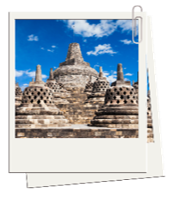
The Borobudur Temple, located in Magelang, Central Java, is one of the most significant Buddhist temples in the world. It was built in the 9th century and is known for its stunning architecture and intricate carvings. The temple is constructed of volcanic stone and features a large central dome surrounded by smaller stupas. Borobudur is visited by thousands of tourists every year and is a UNESCO World Heritage Site. The temple is said to symbolize the journey to enlightenment, with each of its terraces representing a different stage in life.
The Prambanan Temple
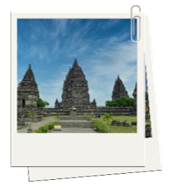
Prambanan is a large Hindu temple complex located in Yogyakarta. Built in the 9th century, it is dedicated to the Trimurti, the three major Hindu gods: Brahma, Vishnu, and Shiva. The temples are made of sandstone, and the site is renowned for its towering spires. Prambanan is famous for its stunning reliefs that depict stories from the Hindu epic, the Ramayana. The temple was largely abandoned after an earthquake in the 16th century but was later restored. It is now an important cultural and religious site.
Bali (Island of the Gods)

Bali, an island in Indonesia, is known for its beautiful beaches, lush green rice terraces, and vibrant cultural heritage. It has been a popular destination for tourists seeking relaxation, adventure, and cultural immersion. Bali is home to many temples, such as Tanah Lot and Uluwatu, which are perched on cliffs overlooking the ocean. The island is famous for its arts, including dance, sculpture, and painting. Bali is also known for its unique Balinese Hinduism, which is deeply embedded in the daily life of its people. Answer the questions below based on the text! 1. What is the Borobudur Temple known for? 2. How is the Prambanan Temple different from Borobudur in terms of religion and architecture? 3. What material is the Borobudur Temple made of? 4. What does Borobudur symbolize? 5. What is the difference between Borobudur and Prambanan Temple? 6. Why was Prambanan abandoned, and how was it restored? 7. Describe Bali’s cultural and natural features mentioned in the text. 8. Which of the three places do you think is the most interesting to visit? Why? 9. Which future expressions would you use to talk about visiting one of these places? 10. Find and underline any passive sentences in the descriptive text. What do they describe?
Mission 2. Exploring Famous Places in Indonesia
Below, you will find two descriptive texts: one about Uluwatu Temple in Bali, Indonesia, and another about The Colosseum in Rome, Italy. Read each text carefully and pay attention to the details about each place.
Uluwatu Temple - Bali, Indonesia
Uluwatu Temple, or Pura Luhur Uluwatu, is one of Bali’s most revered and stunning sea temples. Situated on the southwestern tip of the Bukit Peninsula, the temple is perched on a dramatic cliff that rises 70 meters above the Indian Ocean. It was built in the 11th century by a Hindu priest from Java, and it is dedicated to the sea gods. The temple complex consists of several shrines, pavilions, and statues, and it is surrounded by lush gardens. Uluwatu is famous for its breathtaking views, especially during sunset, when the temple is bathed in golden light. The temple is also home to many monkeys, who roam the area, often entertaining tourists. The site is a popular destination for visitors seeking a peaceful, spiritual atmosphere and is also known for its traditional Kecak dance performances held at the temple’s open-air amphitheater. The temple has been preserved by local Balinese communities, who play a key role in its upkeep.
The Colosseum - Rome, Italy
The Colosseum, also known as the Flavian Amphitheatre, is one of the most iconic and well-preserved landmarks in Rome, Italy. Construction began in 70 AD under Emperor Vespasian and was completed in 80 AD under his successor Titus. The Colosseum is an elliptical structure made of concrete and stone and is famous for its grandeur and innovative architecture. It could hold up to 80,000 spectators who would gather to watch gladiatorial contests, animal hunts, and mock naval battles. The arena has four levels, and its design influenced the architecture of modern sports stadiums. Though damaged by earthquakes over the centuries, the Colosseum remains an architectural marvel and a symbol of ancient Roman power and engineering. Today, it is one of the most visited tourist attractions in the world, attracting millions of visitors annually. The Colosseum is maintained by the Italian government, and its preservation efforts are crucial for protecting this important cultural site. It is often said that the Colosseum represents the spirit of ancient Rome and its entertainment culture, captivating visitors with its history and mystery.
Analysis Table: Compare Uluwatu Temple and The Colosseum
| Aspects | Uluwatu Temple – Bali, Indonesia | The Colosseum – Rome, Italy |
|---|---|---|
A descriptive text is a type of writing that aims to describe a person, place, object, or event in detail. The primary goal is to provide readers with a vivid image in their minds by using sensory details and clear language. In a descriptive text, the writer often focuses on specific characteristics—such as size, shape, color, texture, and smell—to help the reader form a mental picture of the subject. Types of descriptive text: Describing Places: In descriptive texts about places, the writer focuses on landmarks, natural features, cities, towns, or buildings, giving the reader a sense of what the place is like. Describing People: Descriptive texts about people focus on physical features, personality, and sometimes actions or behavior. Describing Objects: These texts give details about an object, focusing on shape, color, texture, material, and size. Describing Events or Experiences: A description of an event or experience focuses on the atmosphere, emotions, and sensory details that make the experience memorable.
Mission 3. Jakarta Through Different Lenses
Below you will find a descriptive text about Jakarta, the capital city of Indonesia, and a dialogue between two people discussing the city. In both the text and the dialogue, facts and opinions are mixed.
Jakarta, Indonesia
Jakarta, the bustling capital of Indonesia, is located on the island of Java. With a population of over 10 million people, it is one of the largest cities in Southeast Asia and serves as the political, economic, and cultural center of the country. Jakarta is home to various government institutions, foreign embassies, and multinational companies, making it a significant hub for international business in the region. The city’s skyline is dominated by modern skyscrapers and high-rise buildings, but it also features historical landmarks such as the National Monument (Monas) and Istiqlal Mosque. The National Monument, standing at 132 meters tall, symbolizes Indonesia’s struggle for independence. Istiqlal Mosque, the largest mosque in Southeast Asia, is an architectural marvel and an important center for Islamic worship in the country. Despite its modern appearance, Jakarta is known for its traffic congestion, with long hours spent in traffic jams every day. The city also faces challenges such as air pollution and limited green spaces, which contribute to its environmental problems. Many residents rely on public transportation, including buses and the newly introduced metro, although traffic remains a significant issue. However, Jakarta is rapidly expanding its infrastructure, with projects like the MRT (Mass Rapid Transit) system that aim to ease traffic woes in the future. Jakarta’s climate is typically tropical—hot and humid, with temperatures regularly exceeding 30°C (86°F). The rainy season, from November to March, brings heavy rainfall and occasional flooding, which can disrupt daily life. However, the city is filled with vibrant markets, shopping malls, restaurants, and entertainment options that attract millions of tourists every year. Jakarta is a melting pot of cultures, with strong influences from Javanese, Chinese, Arabic, and Dutch heritage. The city’s cuisine is equally diverse, offering everything from traditional Indonesian dishes like nasi goreng to international fast food and fine dining. The city is divided into five administrative regions: Central Jakarta, West Jakarta, South Jakarta, North Jakarta, and East Jakarta. Each area has its own unique characteristics, ranging from the busy commercial centers in the north to the quieter, residential neighborhoods in the south. Jakarta’s rapid population growth and urbanization present challenges in terms of housing, public services, and social inequality, but the city remains a symbol of Indonesia’s dynamic future.
Discussing Jakarta
Anna: I just got back from Jakarta, and I have to say, I was really impressed! The city is so full of energy, and there's always something happening. From shopping malls to cultural festivals, it never feels like there's a dull moment. Liam: Really? I’ve heard that Jakarta is super crowded and chaotic. The traffic is terrible, and I imagine it’s hard to get around. I’m not sure I’d enjoy that. Anna: Oh, you're right about the traffic. It can be a nightmare, especially during rush hour. But, I found that Jakarta has a lot of hidden gems. I visited the Monas, and the view from the top was amazing. You can see the entire city from there, and the historical significance of the monument is fascinating. Liam: Yeah, I’ve seen the pictures of Monas. It looks pretty impressive. But, I’ve also heard that the pollution there is really bad, and the weather is almost always hot and humid. Doesn’t that make it hard to enjoy the city? Anna: Yes, the air quality isn’t great, but I didn’t mind it much because the energy of the city was so lively. I also went to Istiqlal Mosque, and I was amazed by its size and beauty. It’s so peaceful inside, especially when you compare it to the hustle and bustle of the streets outside. Liam: Hmm, I suppose I could visit Jakarta for a short trip, but I don’t think I’d want to live there long-term. The constant noise and pollution might get to me after a while. Anna: That’s fair. Jakarta is definitely not for everyone, but I think it’s one of the most exciting cities in Southeast Asia. There’s a unique blend of modern and traditional elements that makes it special. I’m planning to visit again next year to explore more of the local markets and try some new food! Liam: I guess it could be fun for a vacation, but I’d probably prefer a quieter destination for living. Maybe Bali or somewhere more laid-back. Anna: I totally get that. Bali is gorgeous, but Jakarta definitely has its charm, especially if you're into the vibrant city life. It’s a place where East meets West, and there’s always something new to discover.
Classifying Table: Fact or Opinion?
| Statement | Fact | Opinion |
|---|---|---|
Mission 4. Find the Fact and Opinion!
Below are two descriptive texts about famous places: one about Sydney Opera House (Australia) and the other about Machu Picchu (Peru). Read each text carefully. After reading, classify each sentence from the texts into facts or opinions in the table provided below.
Sydney Opera House
The Sydney Opera House, located on Bennelong Point in Sydney Harbour, is one of the most recognizable landmarks in the world. It was designed by Danish architect Jørn Utzon and opened in 1973. The building is famous for its unique sail-like design and white ceramic tiles that cover the roof. The Opera House hosts over 1,500 performances annually, including operas, ballets, and concerts. The structure consists of multiple performance halls, including the Concert Hall, which has a seating capacity of 2,700. It is a UNESCO World Heritage Site and is considered one of the greatest architectural works of the 20th century. Visitors can take guided tours to explore the building's interior, or simply enjoy the view of the Opera House from the adjacent Royal Botanic Garden. While the Opera House is often admired for its bold design and cultural significance, some people argue that the building’s location next to Sydney Harbour can make it feel overcrowded during peak tourist seasons. However, it remains an iconic symbol of Australia and is a must-visit destination for anyone traveling to Sydney.
Machu Picchu
Machu Picchu is an ancient Incan city located high in the Andes Mountains in Peru. It was built in the 15th century and abandoned in the 16th century during the Spanish Conquest. The site was rediscovered in 1911 by American historian Hiram Bingham. Machu Picchu is one of the most well-preserved archaeological sites in South America and was designated a UNESCO World Heritage Site in 1983. The city is located at an altitude of over 2,400 meters and is known for its stunning terraces, temples, and intricate stonework. The most famous structures at Machu Picchu include the Intihuatana stone, which was used as a solar clock, and the Temple of the Sun, which is thought to have had religious significance. The site offers breathtaking views of the surrounding mountains and the Urubamba River below. Many travelers consider Machu Picchu to be one of the most awe-inspiring sites in the world, thanks to its historical and spiritual significance, as well as its dramatic location. However, some visitors feel that the site has become too commercialized due to the increasing number of tourists. Still, it remains a popular destination for those interested in Incan history and archaeology.
Classifying Table: Fact or Opinion?
| Statement | Fact | Opinion |
|---|---|---|
A fact is a statement that can be proven to be true or false based on evidence. Facts are objective and do not rely on personal feelings or beliefs. They are usually verifiable through research, observation, or reliable sources. Characteristics of a fact: It can be verified or proven with evidence. It is objective and does not change depending on personal perspectives. Facts are often supported by data, statistics, or physical proof. Examples: "The Eiffel Tower is located in Paris, France." "Water boils at 100°C (212°F) at sea level." "The Great Wall of China is over 13,000 miles long." "Mount Everest is the highest mountain in the world." An opinion is a personal belief, feeling, or view that cannot be proven true or false. Opinions are subjective, meaning they are based on individual experiences, preferences, or interpretations. Since opinions are not based on verifiable facts, they may differ from person to person. Characteristics of an opinion: It is subjective and based on personal preferences or feelings. It cannot be proven true or false. Opinions often use words like "I think", "I believe", "In my opinion", or "It seems". Examples: "Paris is the most beautiful city in the world." "Chocolate ice cream is the best flavor." "This movie is boring." "I think summer is the best season."
Mission 5. Discover the Magic of Bali
Below is a brochure for the Bali Adventure Package, which includes details about the places you will visit, activities included in the package, pricing, and how to book the trip. Read through the brochure carefully to understand what the package offers.
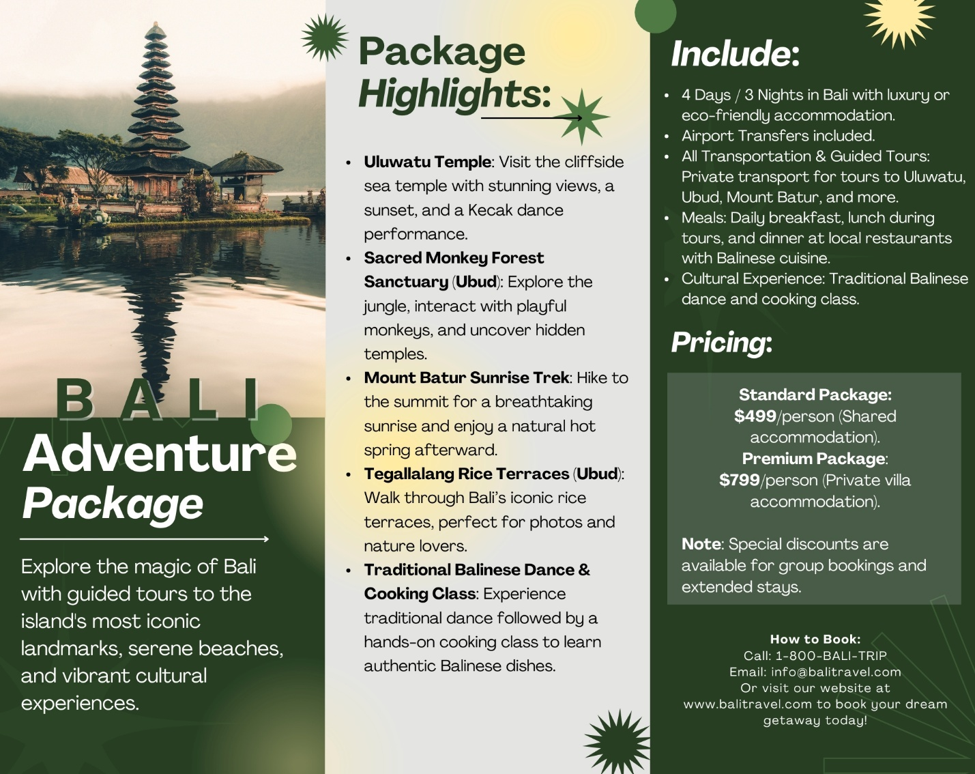
After reading the brochure, answer the following questions based on the information provided. Be sure to highlight specific details from the brochure to support your answers. 1. What activities are included in the Bali Adventure Package? 2. What is the duration of the Bali Adventure Package? 3. What are the two types of accommodations available in the package? 4. What is included in the pricing for the package? 5. How can you book the Bali Adventure Package? 6. What is the cost of the Standard Package per person? 7. What type of cultural experience is offered in the package?
Mission 6. Guess the Word!
Below, you will find a list of definitions of words related to places, buildings, and towns. Take a moment to read each word carefully and understand its meaning. Next, you'll see a word box; your task is to match each definition with the correct word. Word box: Skyscraper / Museum / Suburb / Fortress / Village / Monument / Skylines / Temple / Downtown
| Definition | Word |
|---|---|
Mission 7. A Critical Thinking Challenge!
You will be given several statements related to places, buildings, and towns. Each statement could be either a fact or an opinion. For each statement, decide whether it is a fact or an opinion. Write "Fact" or "Opinion" next to each statement.
| Statement | Fact or Opinion | Explanation |
|---|---|---|
Passive voice is a grammatical construction where the subject of the sentence receives the action of the verb, rather than performing the action. In other words, the focus shifts from the doer (the agent) to the receiver of the action. Structure of passive sentence: Subject + (form of the verb "to be") + Past Participle of Verb + (by + Agent) Subject = The entity receiving the action. Form of "to be" = These changes according to the tense of the verb (e.g., is, are, was, were, will be). Past Participle = The main verb in its past participle form (e.g., "done," "seen," "built"). (by + Agent) = The doer of the action (optional, and often omitted when the doer is not important or unknown). How to form passive sentence: Identify the Object of the Active Sentence: Find the object of the active sentence. In the active voice, the subject performs the action on the object. This object will become the subject of the passive sentence. Change the Subject to the Object: The object in the active voice becomes the subject of the sentence in passive voice. Use the Correct Form of "To Be": The form of "to be" (is, are, was, were, etc.) is chosen based on the tense of the verb in the active voice. Use the Past Participle of the Main Verb: The main verb is changed to its past participle form in the passive voice (e.g., "build" becomes "built"). Optional: Include the Agent ("by"): In the passive voice, you can add "by" to indicate who performed the action. However, in many cases, the agent is omitted because the focus is on the action itself, not on who did it.
Mission 8. Converting Active Sentences into Passive Voice
Below, you will find a list of active sentences. Your task is to transform each active sentence into its passive voice counterpart. Remember that the structure of a passive sentence is: Subject + (form of "to be") + past participle of the verb + (by + agent).
| Active Sentence | Passive Sentence |
|---|---|
Mission 9. Complete the Passive Sentences
Below are sentences with missing parts. Your task is to complete each sentence by filling in the correct form of the verb "to be" (am, is, are, was, were, will be) and the past participle of the main verb. 1. The house was built (build) by the workers last year. 2. The cake __________ (bake) by the chef yesterday. 3. The report __________ (submit) by the team tomorrow. 4. A new bridge __________ (build) in the city next year. 5. The new law __________ (announce) by the president last week. 6. The letters __________ (deliver) to the office every morning. 7. The building __________ (renovate) last summer. 8. The homework __________ (complete) by the students before the deadline. 9. The documents __________ (prepare) by the secretary right now. 10. The proposal __________ (discuss) at the meeting next Monday. 11. The city __________ (flood) by heavy rains last week.
Mission 10. Convert the Paragraph into Passive Voice
Your task is to convert the entire passage from active voice to passive voice. Remember to maintain the original meaning, focusing on the action rather than the person performing the action.
| Active Passage | Passive Passage |
|---|---|
Mission 11. A Parisian Perspective: Facts and Views
Read the descriptive text about Paris, one of the most iconic cities in the world. As you read, identify fact (verifiable information), opinion (subjective view or belief), and passive sentence (a sentence where the subject receives the action).
Paris – The City of Lights
Paris, the capital of France, is one of the most visited cities in the world, attracting millions of tourists each year. The Eiffel Tower, standing at 330 meters tall, is a symbol of the city’s rich history and innovative architecture. It was designed by the engineer Gustave Eiffel and completed in 1889 as the entrance arch to the 1889 World’s Fair. Today, it is a popular landmark, offering panoramic views of the city from its observation decks. The Louvre Museum is another must-see destination in Paris. It houses one of the most famous works of art in history, the Mona Lisa. This iconic painting is displayed in a climate-controlled room to ensure its preservation, and it draws millions of visitors annually. Paris is also known for its charming streets, particularly in the Montmartre district, where artists have gathered for centuries to showcase their work. Many consider Montmartre to be the heart of artistic expression in Paris. Parisian cuisine is also famous worldwide. French croissants, escargots, and coq au vin are just a few examples of the delectable dishes that define the city’s food culture. Many people say that eating in Paris is an experience that cannot be missed. The city’s romantic atmosphere, especially in the evening when the lights illuminate the streets, adds to its allure. While Paris is a modern, bustling city, it retains a charming, old-world feel that is evident in its many historic buildings and cobblestone streets. Paris continues to be a center of culture, art, fashion, and history, making it a timeless destination for travelers from around the world.
Identification Table
| Fact | Opinion | Passive Sentence |
|---|---|---|
Mission 12. Paint with Words: Write Your Own Description
Now it's time to put your understanding into practice by writing your own descriptive text. Think about a place, person, or thing you would like to describe. In your text, make sure to include vivid details that paint a clear picture for the reader. Follow the steps below to guide you through the process of creating your descriptive piece. 1. Think about a place, building, or town that you find interesting. This could be: • A famous landmark (e.g., Eiffel Tower, Great Wall of China) • A town or city you have visited or would like to visit • A building or monument you admire • A park or natural wonder 2. Write a descriptive text of at least 150 words about your chosen place, building, or town. Be sure to include: • Facts: Provide verifiable details (e.g., location, history, size, etc.). • Opinions: Share your personal thoughts or what makes this place special to you (e.g., "It is the most beautiful city in the world"). • Passive Voice: Include at least one passive sentence to describe an action or process. 3. Describe what you see, hear, smell, and feel in the place you're describing. Use adjectives and descriptive language to create a vivid image for the reader.
The Great Wall of China is the longest human-made structure ever built, stretching over 13,000 miles. Contrary to popular belief, it is not a single continuous wall but a series of walls and fortifications built by various dynasties over centuries. The wall was constructed to protect Chinese states and empires from invasions and raids by nomadic groups from the north. It is a testament to the ingenuity and determination of the Chinese people and has become a symbol of China's strength and resilience.
Gratis — tolong sebarkan
Materi dan latihan di sini bisa dipakai siapa saja tanpa membayar dan tanpa mendaftar. Aplikasi Fitri Learning membawa semuanya ke HP, lengkap dengan nilai dan pembahasan, dan jalan tanpa internet setelah diunduh sekali.
Gratis, tanpa akunUnduh aplikasinya → Ilmu yang bermanfaatBagikan ke WhatsApp