
A picture may be worth a thousand words, but the right words can bring a scene to life. Descriptive writing allows us to capture the beauty and essence of a place. In this unit, you’ll explore how to craft vivid descriptions, use key language features effectively, and bring locations to life with precision and creativity.
Mission 1. A Bite of Culture
Read the descriptive text about Rendang carefully. Then, answer the following questions by checking the box next to the correct answer. Make sure to review all options before making your selection.
Rendang – The Pride of Indonesian Cuisine
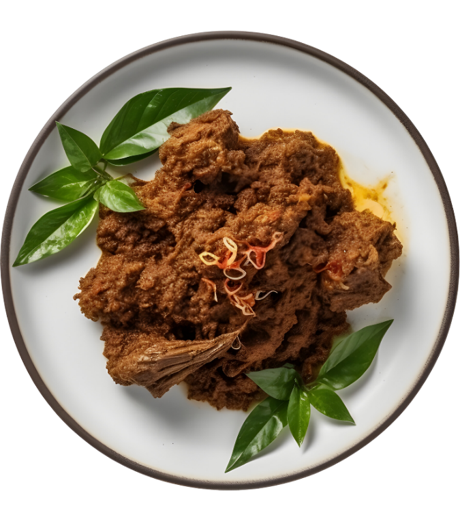
Rendang is a traditional Indonesian dish that originates from the Minangkabau ethnic group in West Sumatra. It is a slow-cooked dish made with tender beef simmered in coconut milk, spices, and herbs. The cooking process is long and careful, often taking several hours, which allows the meat to absorb the rich and savory flavors. The key ingredients of rendang include lemongrass, galangal, garlic, chili, and turmeric, giving the dish its distinct aroma and deep, complex taste. The result is a thick, dark, caramelized sauce that coats the meat, making it tender, flavorful, and incredibly delicious. Rendang is often served at special occasions, celebrations, and festivals, as it symbolizes hospitality, tradition, and respect. It is considered one of the most popular dishes in Indonesia and has even been recognized as one of the world's best dishes by international food critics. While rendang is traditionally made with beef, variations using chicken, lamb, and other proteins are also common. The dish is often enjoyed with steamed rice, and it pairs well with fresh vegetables and sambal (a spicy chili sauce).
| # | Options |
|---|---|
Mission 2. Unwrap the Truth: Rendang Edition
Review the statements provided and determine whether each one is true or false based on the information from the text "Rendang – The Pride of Indonesian Cuisine" in the previous mission. Mark the correct answer by checking the appropriate box. If a statement is false, be ready to explain why or provide the correct information.
| Statement | True | False |
|---|---|---|
Mission 3. Exploring Traditional Dances: Legong vs. Saman
Read the two texts provided about Legong Dance and Saman Dance carefully, then fill in the table with the information you found from both texts. Compare the two dances based on the categories provided in the table.
The Traditional Dance of Bali - Legong Dance
The Legong dance is a classical Balinese dance that is known for its intricate movements and beautiful costumes. It is performed by young girls who have been trained in the art from a young age. The dance is often performed during temple ceremonies, festivals, and cultural events in Bali. The performers wear elaborate costumes, including golden headdresses and flowing sarongs, which are embellished with intricate gold embroidery. The Legong dance is accompanied by gamelan music, a traditional ensemble of Balinese percussion instruments, which sets the rhythm and tone for the performance. The movements of the dancers are highly synchronized with the music, and the facial expressions of the performers play an important role in conveying the emotions of the story being told. The dance tells a traditional Balinese story, often depicting love, struggle, or triumph. In addition to its beauty, the Legong dance holds significant cultural meaning for the Balinese people, representing devotion, beauty, and tradition. It is passed down through generations and is an important part of the island's rich cultural heritage.
The Traditional Dance of Java - Saman Dance
The Saman dance, originating from Aceh province in northern Sumatra, is another famous traditional dance of Indonesia. Known as the "dance of a thousand hands," it is performed by a group of dancers who sit in a circle and perform synchronized movements to the rhythm of music. The dancers use their hands, arms, and entire bodies to create rhythmic patterns and gestures that are visually striking. The Saman dance is often performed at religious ceremonies, festivals, and celebrations in Aceh. It is typically accompanied by rhythmic chanting and clapping, with the entire group moving in perfect harmony. The speed and precision of the movements are a key feature of the dance, and the performers’ expressions and gestures convey a deep sense of unity and devotion. The Saman dance is often performed by men, but women are also involved in some versions of the dance. It has become a symbol of unity and cooperation, as it requires complete synchronization and cooperation among all the dancers. In 2011, the Saman dance was recognized by UNESCO as an Intangible Cultural Heritage of Humanity, underscoring its cultural significance and importance in Indonesia.
| Context | Legong Dance | Saman Dance |
|---|---|---|
| Legong dance | Saman dance |
|---|---|
Nasi Goreng is a genius way to use up leftover rice, turning a simple dish into a flavorful feast! Traditionally, it’s cooked with garlic, shallots, chili, and the star ingredient, kecap manis, a sweet soy sauce that gives the dish its one-of-a-kind flavor. It’s not just a meal, it’s an experience—topped with a fried egg and paired with crunchy prawn crackers, pickled veggies, and cool cucumber slices. And here’s the real kicker: Nasi Goreng earned the title of "World's Best Fried Rice" at the 2011 World Street Food Congress! It’s not just a favorite in Indonesia, but a global sensation!
Descriptive Text is a type of writing that provides detailed information about a person, place, object, or event in order to create a vivid image in the reader’s mind. The goal of a descriptive text is to help the reader visualize what is being described using sensory details, such as sight, sound, smell, taste, and touch. Structure of descriptive text: Introduction (identification): It provides a general overview and sets the context for what will be described. This part typically answers the "What is it?" or "Who is it?" question. Body (description): elaborates on the features, qualities, or characteristics of the subject to paint a vivid picture in the reader’s mind. Descriptive texts use specific language features, like relating verbs (also called linking verbs); these verbs are used to connect the subject of a sentence with information about it. They help provide a description or explain what the subject is like. These verbs are not action verbs, but instead, they "relate" the subject to its attributes or qualities. Common relating verbs: Is, are, was, were (forms of the verb "to be"). Seem, seems, seemed. Feel, feels. Look, looks. Appear, appears. Become, becomes. Degree of comparison is used when describing and comparing two or more things. It indicates the extent or intensity of the qualities being described. In descriptive writing, comparisons help convey a stronger sense of what something is like, allowing the writer to express differences or similarities more clearly. Types of degrees of comparison: Positive Degree – the basic form of the adjective, used to describe a single thing without comparing it to anything else. Comparative Degree – compares two things, often showing that one has more or less of a quality than the other; usually ends in -er or uses "more"/"less". Superlative Degree – compares three or more things, highlighting the most or least of a certain quality; usually ends in -est or uses "most"/"least".
Mission 4. The Verb Exploration
Read the passage and identify all the related verbs and degrees of comparison. Categorize them into Relating Verbs and Degrees of Comparison in the table. Be ready to discuss your answers.
The Heartbeat of Jakarta
The bustling city of Jakarta is one of the largest urban centers in Southeast Asia. It is a city that never sleeps, with its streets always filled with cars, motorbikes, and people rushing from one place to another. Jakarta’s skyline is taller than many other cities in Indonesia, with towering skyscrapers that dominate the horizon. The city’s atmosphere is more vibrant and fast-paced than most other cities in the country. The aroma of street food, such as satay, nasi goreng, and soto, fills the air, tempting pedestrians at every corner. The traffic jams in Jakarta are notorious, often taking hours to navigate, but the city’s energy makes it one of the most exciting places to visit. The night markets in Jakarta are the most lively of all, with colorful lights and bustling crowds, offering a unique blend of local cuisine, music, and culture. Despite its chaotic nature, Jakarta is a city that draws visitors from all over the world, offering an unforgettable experience.
| Relating verbs | Degrees of comparison |
|---|---|
Mission 5. Comparing the Tiger and Dragon
Read the two descriptive texts about the Sumatran tiger and the Komodo dragon. Identify the adjectives used to describe the animals and then fill in the box by writing the comparisons you find in both texts. Think about how these comparisons are made and try applying them to other examples you know.
The Sumatran Tiger
The Sumatran tiger is a subspecies of tiger found only on the Indonesian island of Sumatra. Known for its powerful build, the Sumatran tiger has a thicker and darker coat compared to other tiger subspecies, with striking black stripes on its orange fur. The tiger’s eyes are piercing, and its ears are rounded, giving it a distinctive appearance. This subspecies is smaller than the Bengal tiger but stronger and more agile, allowing it to navigate the dense forests of Sumatra with ease. Sadly, the Sumatran tiger is critically endangered, with fewer than 400 individuals remaining in the wild. Conservation efforts are underway to protect its natural habitat and ensure the survival of this iconic species.
The Komodo Dragon
The Komodo dragon is the world’s largest living lizard and is native to Indonesia’s Komodo Island. These giant reptiles are imposing, with adult males growing up to 10 feet long and weighing over 150 pounds. They are heavier and larger than any other lizard species, making them an apex predator in their habitat. The Komodo dragon's scaly, rough skin helps protect it from the harsh environment. Its tongue, which it uses to sense its surroundings, is longer than that of many other lizards. Known for their strength and speed, Komodo dragons are skilled hunters, often ambushing their prey with quick bursts of movement. Like the Sumatran tiger, the Komodo dragon is also considered a vulnerable species, with limited populations in their native habitat.
Comparison box: 1. ………………………………………………………………………………………………………… 2. ………………………………………………………………………………………………………… 3. ………………………………………………………………………………………………………… 4. ………………………………………………………………………………………………………… 5. …………………………………………………………………………………………………………
Gratis — tolong sebarkan
Materi dan latihan di sini bisa dipakai siapa saja tanpa membayar dan tanpa mendaftar. Aplikasi Fitri Learning membawa semuanya ke HP, lengkap dengan nilai dan pembahasan, dan jalan tanpa internet setelah diunduh sekali.
Gratis, tanpa akunUnduh aplikasinya → Ilmu yang bermanfaatBagikan ke WhatsApp