
Transform the way you share conversations with the power of direct and indirect speech, making your storytelling more engaging and memorable.
Direct speech repeats the exact words spoken by the speaker. The speaker's name or identity can be mentioned before or after their words. Indirect speech reports the meaning of what was said but not the exact words. The speaker is still identified, either before or after the report.
| Direct Speech | Indirect Speech | Explanation |
|---|---|---|
| He said, "I am working on my project." | He said that he was working on his project. | Am working → was working |
| Maria said, "I have finished my homework." | Maria said that she had finished her homework. | Have → had |
| He said, "I will call you tomorrow." | He said that he would call me the next day. | Will → would |
| Sarah said, "I can solve this problem." | Sarah said that she could solve that problem. | Can → could |
| John said, "I do my homework every evening." | John said that he did his homework every evening. | Do → did |
| She said, "We are happy today." | She said that they were happy that day. | Are → were |
| He asked, "Do you like ice cream?" | He asked if I liked ice cream. | "do" is removed |
| Sarah asked, "Where are you going?" | Sarah asked where I was going. | Are → were |
| The teacher asked, "Have you finished your work?" | The teacher asked if I had finished my work. | Have → had |
| She said, "What a beautiful dress!" | She said that it was a beautiful dress. | The exclamation is rephrased as a statement. |
| He said, "How amazing this view is!" | He said how amazing the view was. | The tone of surprise is retained but turned into a statement. |
| They said, "What a great idea!" | They said that it was a great idea. | The excitement is transformed into a reported statement. |
Mission 1. Transform the Sentences
Transform the direct speech sentences into indirect speech by adjusting the wording, such as tenses, pronouns, and time references. Then, reconstruct the indirect speech sentences into their original direct form.
| Direct Speech | Indirect Speech |
|---|---|
| Tom said, "I can't attend the meeting tomorrow because I'm traveling." | Tom said that he couldn't attend the meeting the next day because he was traveling. (example already filled in) |
| They said, "We will finish the project by next week." | … |
| Sarah said, "I didn't understand the question in the test." | … |
| The teacher said, "You must submit your assignments on time." | … |
| John said, "I have been waiting for the bus for an hour." | … |
| The children said, "We are playing a new game in the garden." | … |
| Indirect Speech | Direct Speech |
|---|---|
| She said that she was feeling tired after the trip. | She said, "I am feeling tired after the trip." (example already filled in) |
| He said that he hadn't completed the project yet. | … |
| They said that they would organize the event next month. | … |
| He said that he had been waiting for a response for days. | … |
| The boy said that he was playing football with his friends. | … |
| Maria said that she had been working on the presentation all day. | … |
Mission 2. Spot the Mistakes
Identify and correct the errors in the following sentences:
| Direct Speech | Indirect Speech (with error) | Correct / Explanation |
|---|---|---|
| John said, "I will meet you tomorrow." | John said that he will meet me tomorrow. | Correct: John said that he would meet me the next day. Explanation: The modal "will" changes to "would." |
| The teacher asked, "Have you finished your homework?" | The teacher asked if I have finished my homework. | Correct: … Explanation: … |
| He said, "I was waiting for the bus." | He said that he was waiting for the bus. | Correct: … Explanation: … |
| Sarah said, "I can fix the car." | Sarah said that she can fix the car. | Correct: … Explanation: … |
| Tom asked, "Where is the nearest station?" | Tom asked where is the nearest station. | Correct: … Explanation: … |
| She said, "I am going to the park." | She said that she is going to the park. | Correct: … Explanation: … |
Mission 3. Identifying Direct and Indirect Speech
Highlight and write down all the direct and indirect speech you find in the text.
The Day the Rain Stopped
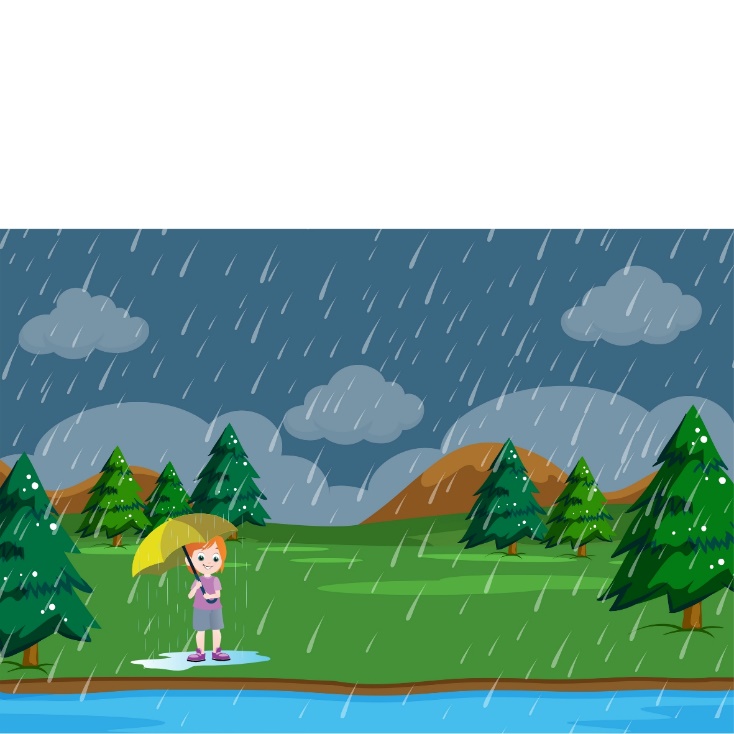
It was a rainy morning when Anna looked out of the window and sighed. "Will it ever stop raining?" she said to her brother, Jake. Jake laughed and replied, "Don't worry, Anna. The weather report said that it will clear up by noon."
Anna decided to call her friend Sarah to check on their weekend plans. "Are we still going to the park later?" Anna asked her. Sarah sounded hesitant but hopeful. "If the rain stops, I'll meet you there at 3 PM," Sarah said.
By noon, the rain had stopped, and the sun was shining brightly. Jake came running into the living room and shouted, "See? I told you it would stop!" Anna smiled and told him, "You were right this time!"
Later at the park, Sarah waved as Anna and Jake arrived. "I was starting to think you wouldn't show up!" Sarah said. Anna laughed and explained that the weather had kept her guessing all morning. "But we're here now, and that's what matters," Anna said happily.
Remember, direct speech shows the exact words of the speaker, and the indirect speech summarize what someone said without using their exact words.
| Direct Speech | Indirect Speech |
|---|---|
| "Will it ever stop raining?" she said to her brother, Jake. | Jake had told Anna earlier that the weather report said it would clear up by noon. (example already filled in) |
| … | … |
| … | … |
| … | … |
| … | … |
| … | … |
Gratis — tolong sebarkan
Materi dan latihan di sini bisa dipakai siapa saja tanpa membayar dan tanpa mendaftar. Aplikasi Fitri Learning membawa semuanya ke HP, lengkap dengan nilai dan pembahasan, dan jalan tanpa internet setelah diunduh sekali.
Gratis, tanpa akunUnduh aplikasinya → Ilmu yang bermanfaatBagikan ke WhatsApp