
Stories can be exciting, surprising, and full of lessons. In this unit, we'll learn how to create narratives that keep readers interested. You'll discover how to develop characters, add conflict, and structure your story so it stays engaging and memorable.
Mission 1. Think and Share
Respecting others, especially those from different cultures, is essential in today's diverse world. Think about moments when you've shown respect or learned from others.
- What does it mean to respect someone, and why is it important in building good relationships?
- Why do you think showing respect to people from different cultures or backgrounds is especially important in our diverse world?
- Can you think of a moment when you or someone you know showed respect to someone different from them? How did it make a difference?
- Have you ever felt respected or disrespected by someone because of who you are? How did that experience affect you?
- How do stories—whether personal, cultural, or fictional—help us understand the value of respecting others?
- What are some ways people can celebrate cultural differences while showing respect to each other?
- What lessons can we learn from respecting and embracing differences, and how can these lessons help us in daily life?
Mission 2. Understanding through Reading
Read the story below and take a moment to think about a time in your life when you experienced something similar or felt connected to the events in the story.
Finding Friendship through Respect
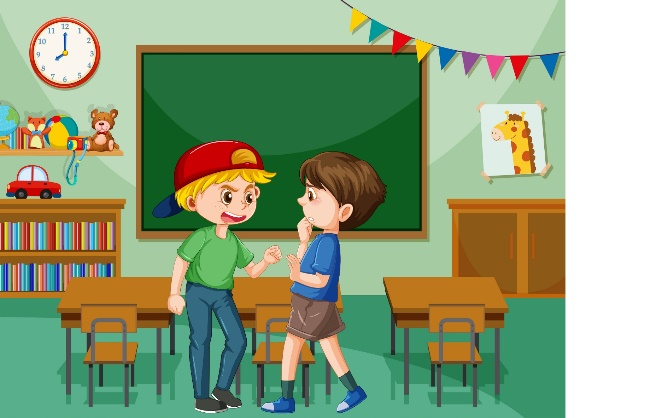
In a small village in Indonesia, there was a boy named Aji who loved to play with his friends. One of his classmates, Rudi, was new to the village. He came from a big city far away, and he spoke with a different accent and wore clothes that the other kids found strange.
At first, Aji didn't think much about it, but soon he noticed that Rudi was being teased. The other kids made fun of his accent and the way he ate, and Aji laughed along with them. It seemed harmless at the time, just some jokes, but he noticed that Rudi's face would turn sad whenever they laughed.
One afternoon, Aji saw Rudi sitting alone by a creek. His head was down, and he looked upset. Aji felt something inside him shift. He walked over and sat beside him. "Are you okay, Rudi?" he asked.
Rudi looked up, his eyes red. "I don't fit in here. They laugh at me because I'm different," he said quietly.
Aji thought for a moment. "I used to laugh too, but I didn't understand," he admitted. "I know now that being different is nothing to laugh about. Everyone deserves respect, no matter where they come from or how they speak."
Rudi smiled, just a little. "You really think so?"
"Yeah," Aji nodded. "We should all treat each other with kindness and respect. It's what makes us friends, no matter how different we are."
The next day at school, Aji stood up in front of the class. "I just want to say that we should all be kind to Rudi and to each other. It's not okay to make fun of anyone for being different."
From then on, the teasing stopped. Aji and Rudi became good friends, and slowly, the whole class learned to respect each other's differences. They realized that respecting others makes everyone feel accepted and valued, no matter where they come from.
Mission 3. Dive into Stories
Let's reflect on these ideas through a few questions to guide our understanding.
- Why did the other students tease Rudi, and how did it make him feel?
- How did Aji's attitude toward Rudi change throughout the story?
- What lesson did Aji learn about respect and kindness?
- How did Aji show courage in addressing the class about respecting Rudi?
- What is the main message of the story, and why is it important in a diverse community?
A narrative text is a story that guides readers through a sequence of events, whether based on reality or born from imagination. It can explore anything, a breath-taking adventure, a heartfelt experience, or a tale that shares a meaningful lesson. The purpose of narrative texts is to entertain, educate, and inspire. They allow readers to experience life through the eyes of the characters, to feel their emotions, and to learn from their experiences. The structure of narrative text: Orientation (introduces the setting, characters, and situation); Complication (presents a problem or conflict that drives the story); Resolution (shows how the problem is resolved, often with a lesson or moral). The elements of narrative text: Setting (the time and place where the story occurs, creating context and atmosphere); Characters (the individuals — protagonist, the main character who drives the story, and antagonist, a character or force that opposes the protagonist); Plot (the sequence of events, typically following orientation, complication, and resolution); Conflict (the central problem or struggle that drives the narrative forward); Theme (the underlying message or main idea, reflecting the moral the author wants to convey); Point of view (the perspective from which the story is told); Moral/lesson (the takeaway message the reader learns). Language features commonly used in narrative texts: Past Tense (narratives often describe events that have already happened); Descriptive Language (rich and vivid descriptions help create clear images and evoke emotions); Dialogue (conversations between characters bring them to life and help convey their personalities and relationships).
Mission 4. Examine the Structure
Let's closely examine and analyze the text to better understand the structure of narrative writing.
| Structure | Paragraph(s) | Explanation |
|---|---|---|
| Orientation | 1-2 | Introduces the setting (small village in Indonesia), main characters (Aji and Rudi), and the situation (Rudi being teased for his differences). |
| Complication | … | … |
| Resolution | … | … |
Mission 5. Analyze the Details
To gain a deeper understanding of narrative text, let's take a closer look and analyze the text "Finding Friendship through Respect" in detail.
| Element | Details |
|---|---|
| Settings — Place | A small village in Indonesia. |
| Settings — Time | Present-day (implied). This setting highlights a community where cultural differences are evident. |
| Characters — Protagonist | … |
| Characters — Antagonist | … |
| Characters — Other characters | … |
| Plot | … |
| Conflict | … |
| Theme | … |
| Point of View | … |
| Moral/lesson | … |
Mission 6. Unlock the Story
Take on this exciting mission to enhance your skills in narrative texts! Follow these instructions and complete your mission.
- Read the shuffled sections of the story and arrange them in the correct order: Orientation → Complication → Resolution.
- After arranging the sections, answer the following questions:
- What clues in the text helped you identify the beginning, middle, and end of the story?
- Why does the story need this specific order to make sense?
- What is the main message of the story, and how does the structure help convey it?
| Section | Text | Explanation |
|---|---|---|
| Orientation | In the bustling town of Harmoni, people from many different cultures lived side by side. Each year, they celebrated their diversity with the Festival of Friendship, where every community showcased their unique traditions. Lina, a young girl from the town, loved the festival but felt uneasy about performing her traditional Batak dance in front of others. She worried people would laugh at her. | …………………………………………………………………………………………………… |
| Complication | As the festival approached, Lina shared her concerns with her classmate, Arif, who was preparing a Sundanese music performance. Instead of supporting her, Arif teased her about her dance, saying it was old-fashioned. Lina felt hurt and considered not participating in the festival. The next day, she overheard Arif struggling with his flute and realized he was nervous too. She decided to approach him, offering encouragement despite his earlier comments. | …………………………………………………………………………………………………… |
| Resolution 1 | Lina's kindness surprised Arif. He apologized for teasing her and admitted he was scared people would mock his performance too. They decided to help each other practice. | Explanation: The problem begins to resolve as Arif apologizes and they work together, showing mutual respect and support. |
| Resolution 2 | On the day of the festival, both Lina's dance and Arif's music were met with cheers and applause. They learned that sharing their traditions wasn't about perfection but about celebrating who they were. The town embraced the beauty of their differences, making the festival a success. | …………………………………………………………………………………………………… |
Indonesia's legends beautifully weave together myth and nature? The tale of Mount Bromo is a captivating narrative in which the Tengger people honor their ancestors and deepen their bond with the land, showcasing the rich tradition of storytelling that keeps their culture and spirituality alive. According to the Tengger people's folklore, Roro Anteng and Joko Seger, a couple who prayed for children, were blessed with 25 offspring on the condition that they sacrifice their youngest to the volcano. Though they resisted, the gods' fury compelled them to fulfill this promise, sacrificing their child, Kesuma, to appease the mountain. This dramatic tale is honored annually during the Yadnya Kasada festival, where offerings are thrown into Mount Bromo's crater.
Mission 7. Practice time
Write your own narrative text based on something you've experienced or imagine a story of your own. Use what you've learned to make it detailed and exciting! Begin with make a plan for your story, don't forget to organize your story based on the elements of narrative text. Then following the structure:
- Start with an engaging opening that sets the scene.
- Develop the conflict to make your story interesting.
- End with a clear resolution and moral.
Gratis — tolong sebarkan
Materi dan latihan di sini bisa dipakai siapa saja tanpa membayar dan tanpa mendaftar. Aplikasi Fitri Learning membawa semuanya ke HP, lengkap dengan nilai dan pembahasan, dan jalan tanpa internet setelah diunduh sekali.
Gratis, tanpa akunUnduh aplikasinya → Ilmu yang bermanfaatBagikan ke WhatsApp