
In this unit, you will focus on telling stories from the past through historical recounts. You will develop your writing skills by using conjunctions to connect events and ideas smoothly, creating a clear and engaging narrative. You will also learn how to reflect on historical events and their impact on our present world.
Mission 1. Timeline of Tragedy: Analyzing Natural Disasters
Read the recount text about natural disasters carefully. After reading, answer the questions that follow, using evidence from the text to support your answers. Pay attention to the sequence of events and how conjunctions and time markers are used to link ideas in the past.
- Natural disasters have shaped the world in many ways, with some of the most devastating events occurring throughout history. One of the earliest major natural disasters in the 20th century was the 1906 San Francisco Earthquake. This earthquake, which struck California, USA, was catastrophic, causing widespread damage and thousands of deaths.
- Nearly a century later, in 2004, the world witnessed one of the deadliest tsunamis in history, caused by a massive earthquake off the coast of Sumatra, Indonesia. The Indian Ocean Earthquake and Tsunami affected several countries, including Indonesia, Sri Lanka, Thailand, and India, claiming over 230,000 lives.
- In 2010, another powerful earthquake struck Haiti, causing widespread destruction and leaving over 160,000 people dead. The recovery process was slow and difficult, as the country struggled to rebuild its infrastructure.
- A few years later, in 2011, Japan was devastated by the Tōhoku Earthquake and Tsunami. This disaster caused massive destruction in the northeastern part of Japan and triggered a nuclear crisis at the Fukushima power plant, with thousands of lives lost.
- In 2017, Hurricane Harvey swept through Texas, USA, bringing record rainfall and flooding that caused significant damage to homes and infrastructure. The hurricane, one of the most destructive in US history, led to widespread displacement and major economic loss.
- Most recently, in 2019, Cyclone Idai hit Mozambique, causing catastrophic flooding and destruction in Mozambique, Zimbabwe, and Malawi. The cyclone displaced millions of people and left many regions struggling to recover.
Answer the questions based on the text! 1. What natural disaster occurred first in the recount? 2. How did the Indian Ocean Earthquake and Tsunami of 2004 impact the countries involved? 3. Which disaster in the recount caused the most fatalities? 4. In which year did Cyclone Idai occur, and which countries were affected? 5. What was the main consequence of the Tōhoku Earthquake and Tsunami in 2011, aside from the destruction caused by the earthquake itself? 6. According to the recount, how did Hurricane Harvey affect Texas in 2017? 7. Which two disasters occurred in the same decade (the 2010s)? 8. In your opinion, what is the significance of global cooperation in responding to natural disasters, based on the events described in the text?
Mission 2. Haiti's Groundbreaking Tragedy
Read the recount text about the 2010 Haiti earthquake carefully. Review the statements below and decide whether they are true or false based on the details from the text. Then, discuss your answers with a partner or group to deepen your understanding and gain new insights.
The 2010 Haiti Earthquake: A Devastating Crisis
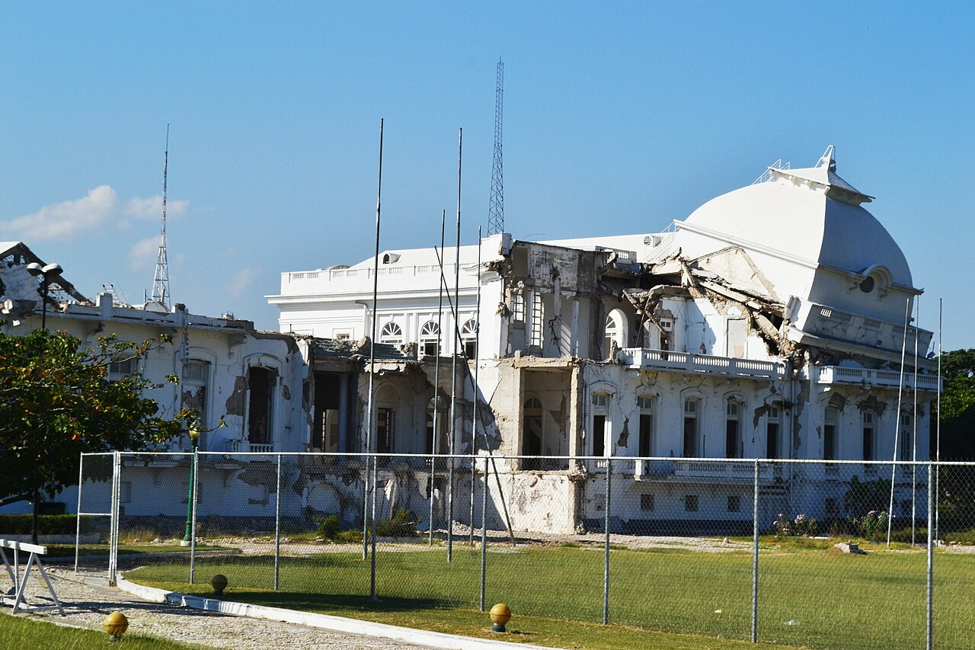
On January 12, 2010, a catastrophic earthquake with a magnitude of 7.0 struck Haiti, one of the poorest countries in the Western Hemisphere. The earthquake's epicenter was just 25 kilometers west of Port-au-Prince, the capital. The tremor lasted for about 30 seconds, but it was powerful enough to cause widespread destruction. Buildings, roads, and infrastructure collapsed in the blink of an eye. The city of Port-au-Prince was severely damaged, with over 230,000 people reported dead and over 1 million displaced. The Haitian government, overwhelmed by the scale of the disaster, immediately appealed for international help. Rescue teams and humanitarian organizations rushed to the scene, bringing with them food, water, medical supplies, and emergency shelter. Despite their best efforts, rescue operations were hindered by the lack of infrastructure, with roads and airports also destroyed. In the aftermath, relief efforts were complicated by ongoing aftershocks and difficult living conditions. Survivors struggled to find clean water and safe shelter, and the country's already fragile healthcare system was unable to cope with the influx of injured people. Nevertheless, the world came together to support Haiti's recovery efforts. International organizations, governments, and local volunteers worked tirelessly to rebuild the city and provide for the affected population. The Haiti earthquake serves as a painful reminder of the vulnerability of nations to natural disasters, especially in countries with limited resources. It also highlighted the importance of disaster preparedness and global cooperation in the face of emergencies.
Statement Check
| Statement | True/False |
|---|---|
Mission 3. Find the Difference!
Read both texts about natural disasters—the 2004 Indian Ocean Tsunami and the 2011 Tōhoku Earthquake and Tsunami.
The 2004 Indian Ocean Tsunami
On December 26, 2004, the world witnessed one of the most devastating natural disasters in recent history: the Indian Ocean Tsunami. This disaster was triggered by a massive undersea earthquake off the west coast of northern Sumatra, Indonesia, with a magnitude of 9.1 to 9.3. The earthquake caused the seafloor to rise dramatically, displacing an enormous amount of water. The resulting tsunami waves, traveling at speeds of up to 500 miles per hour, struck the coastal areas of 14 countries, including Indonesia, Sri Lanka, India, Thailand, and the Maldives. Some areas were hit by waves as high as 100 feet, causing unimaginable destruction. The tsunami left more than 230,000 people dead, with millions more displaced from their homes. The destruction was not just physical; it caused widespread disruption to lives, economies, and environments. Many families were torn apart, and entire communities were wiped off the map. Countries like Indonesia, Thailand, and Sri Lanka faced immense challenges, as their infrastructure was largely unprepared for such an event. Hospitals, schools, homes, and businesses were destroyed. The lack of an early warning system in many of these regions contributed to the high death toll. Global aid poured in from around the world, with countries, NGOs, and the United Nations providing millions of dollars for immediate relief. While recovery efforts were swift in some areas, others, like the Aceh province in Indonesia, took years to rebuild due to the sheer scale of the destruction. In the aftermath, the tsunami prompted a significant push for better disaster preparedness, early warning systems, and global collaboration in disaster response.
The 2011 Tōhoku Earthquake and Tsunami
On March 11, 2011, Japan experienced one of the most powerful earthquakes ever recorded. The Tōhoku earthquake, with a magnitude of 9.0, struck off the eastern coast of the island of Honshu. It was followed by a massive tsunami, which caused widespread devastation. The earthquake, one of the most powerful to ever hit Japan, triggered a series of aftershocks, one of which was almost as strong as the initial quake. The tsunami waves, reaching up to 130 feet in some places, crashed along the coast, sweeping away homes, cars, and buildings. The earthquake and tsunami resulted in the deaths of approximately 15,000 people, with thousands more injured or missing. Entire communities along the northeast coast were submerged, and infrastructure was severely damaged. In addition to the physical destruction, the disaster led to a nuclear crisis at the Fukushima Daiichi Nuclear Power Plant, where cooling systems failed, leading to radiation leaks and the evacuation of nearby residents. The Tōhoku disaster had far-reaching effects on Japan's economy, energy policies, and public perception of nuclear power. Japan's response to the disaster was rapid, with both the government and local authorities mobilizing to provide aid and rescue survivors. Despite its highly developed infrastructure and advanced technology, the scale of the destruction was overwhelming. International aid, while significant, was less needed as Japan had a highly efficient disaster response system. However, the Fukushima nuclear disaster sparked global debates on nuclear energy, safety, and environmental protection.
Compare the texts based on the following aspects:
| Aspects | 2004 Indian Ocean Tsunami | 2011 Tōhoku Earthquake and Tsunami |
|---|---|---|
Mission 4. The 2010 Pakistan Floods: A Recount of Disaster
Below is a jumbled recount of the 2010 Pakistan floods, one of the worst natural disasters in the country's history. The sentences are not in chronological order. Your mission is to rearrange the sentences in chronological order to create a logical recount of the events surrounding the 2010 Pakistan floods.
| Jumbled Events | Correct Order |
|---|---|
A recount text is a type of writing that tells a story or retells events in the order they happened. It typically includes personal experiences, historical events, or factual incidents. The main purpose of a recount text is to provide information or reflect on past experiences by describing them in detail. Key features of recount text: Past Tense: Recount texts are usually written in the past tense because they describe events that have already happened. For example, "I visited the museum," or "The earthquake caused massive destruction." Chronological Order: Events in a recount text are presented in the order they happened, from the beginning to the end. Time markers like "first," "then," "after," "next," and "finally" help organize the sequence of events. Time Markers: Time markers (also known as temporal markers) are words or phrases used to indicate the sequence of events. They help the reader understand when something happens, in what order, and how events are connected in time. Structure of recount text: Introduction: The text often begins by introducing the context or setting of the events. This provides the reader with background information, such as where and when the events took place, and who was involved. Body (Main Events): The main part of a recount text involves describing the events. The writer details what happened, step by step, using time markers and sequence connectors to guide the reader through the events. Conclusion or Reflection: Recount texts often conclude with a final reflection or personal comment on the events. This could be a lesson learned, how the writer felt, or the impact of the events. It may also offer insights into what happened afterward. Types of recount text: Personal Recounts: These recount personal experiences, like writing about a vacation or a memorable event. Example: "The Day I Got Lost in the Mall." Factual Recounts: These recount events in history or news, such as the report of a natural disaster or an event in history. Example: "The Moon Landing of 1969." Imaginative Recounts: These recount fictional or imaginative events, typically used in storytelling. Example: "The Adventure in the Magical Forest."
Example: The 2004 Indian Ocean Tsunami
On December 26, 2004, a massive undersea earthquake struck off the coast of Sumatra, Indonesia. The earthquake, which had a magnitude of 9.1, triggered a series of deadly tsunamis that affected 14 countries. The waves hit with little warning, devastating coastal communities in Indonesia, Sri Lanka, India, Thailand, and other countries along the Indian Ocean. The waves were so powerful that they traveled across the ocean at speeds of up to 500 miles per hour. In some areas, the waves reached heights of 100 feet, sweeping entire towns away. Millions of people were left without homes, and more than 230,000 people lost their lives. Governments and international organizations responded quickly to provide aid and rescue survivors. However, it took years for many affected regions to recover from the damage. In the aftermath of the disaster, global efforts focused on improving early warning systems and disaster preparedness, as the world recognized the need for better response mechanisms to save lives in future natural disasters.
Mission 5. Tracing the Waves: Understanding the Tōhoku Earthquake
Read the recount text about the 2011 Tōhoku earthquake and tsunami carefully. After reading, answer the following questions based on the information in the text. Focus on the key elements of the recount: the Who, What, When, and Where. Be sure to support your answers with evidence from the text.
The 2011 Tōhoku Earthquake and Tsunami
On March 11, 2011, a powerful earthquake struck off the eastern coast of Japan, with a magnitude of 9.0 on the Richter scale. This earthquake was one of the strongest ever recorded in Japan and caused massive shaking along the northeastern coast of Honshu, Japan's main island. The quake lasted approximately 6 minutes, but its aftershocks continued for hours. Just minutes after the earthquake, tsunami waves began to form, traveling across the Pacific Ocean. These waves were especially destructive, with some reaching up to 130 feet in height. As the waves hit the coast, they swept away homes, vehicles, and buildings, leaving entire communities destroyed. The worst-affected areas were in the Fukushima Prefecture, where the damage was severe, and the city of Sendai, which saw entire neighborhoods wiped out. In addition to the physical destruction caused by the earthquake and tsunami, the disaster led to a nuclear crisis. The Fukushima Daiichi Nuclear Power Plant was severely damaged, causing radioactive leaks and forcing thousands of residents to evacuate. This nuclear disaster compounded the tragedy, adding to the fears and challenges faced by the country. The earthquake and tsunami resulted in the deaths of over 15,000 people, with thousands more injured or missing. In the aftermath, Japan's government mobilized immediate relief efforts, but the destruction was so vast that the recovery process has taken years. International aid poured in, with many countries offering support in the form of food, medical supplies, and rescue teams. The disaster was a devastating reminder of the power of nature and highlighted the urgent need for disaster preparedness, particularly in regions vulnerable to earthquakes and tsunamis. It also prompted global discussions about the safety of nuclear power plants and the need for stronger safety protocols. Answer these questions based on the text: 1. Who was involved in the event? 2. What happened during the disaster? 3. When did the earthquake and tsunami occur? 4. Where did the earthquake and tsunami take place? 5. What impact did the tsunami have on the affected regions? 6. What additional disaster occurred after the earthquake?
Temporal conjunctions are words or phrases used to link actions or events in a recount text, showing their relationship in time. These conjunctions help to sequence events and make the recount flow smoothly. They give readers an understanding of when something happened, what happened next, and how events are connected. Common temporal conjunctions: Before / After — Then / Next — While / Later — Meanwhile / Finally
Mission 6. Identifying Temporal Connections
Read the letter below, which describes someone's experience during a natural disaster. As you read, identify all the temporal conjunctions used in the recount. Once you've identified the temporal conjunctions, underline or highlight them and make a note of how they help sequence the events in the story.
Dear Family, I hope you are doing well. I wanted to tell you about my experience during the terrible earthquake and tsunami that struck Japan on March 11, 2011. It's been a few weeks now, but it feels like everything happened just yesterday. I remember that day very clearly. At first, it was a normal, quiet morning. I was having breakfast when suddenly the whole building started shaking. Before I could even stand up, the tremor became much stronger, and I could hear the windows rattling violently. My heart raced as I realized it was a massive earthquake. Then, everything went silent for a moment, and we all waited in fear. After the shaking stopped, I rushed to the doorway, as I had been taught during earthquake drills. Meanwhile, people in the streets were panicking, running around trying to find shelter. While I was trying to calm down, the emergency alerts on my phone started buzzing. It said that a tsunami was expected. Soon after, the tsunami warning sirens blared loudly, and I knew we had to evacuate. I gathered my things quickly and left the building with my colleagues. As soon as we reached higher ground, the shaking started again—this time, it felt like the earth was moving under our feet. The tsunami waves were coming. Later, we watched in disbelief as the waves swept away everything in their path. Homes, cars, and even whole buildings were carried away by the water. It was devastating to see such destruction in front of our eyes. Finally, after what seemed like hours, the water started to recede. I couldn't believe how much damage had been done. It felt like the world had turned upside down. By the time the rescue teams arrived, many people were already trying to dig through the rubble to find their loved ones. I stayed in the shelter for a few days until I received word that my family was safe. Since then, the recovery process has been slow, but I'm hopeful that with the help of the international community, we will rebuild. I wanted to share this with you so you understand just how much of an impact this disaster has had on our country. We're all doing our best to stay strong and support each other. I miss you and hope to see you soon when things settle down. Take care and stay safe. Love, Nami Temporal conjunctions found within the text: At first / ……………… / ……………… / ……………… / ……………… / ……………… / ……………… / ………………
Mission 7. Mastering Natural Disaster Vocabulary
In this activity, you will match each natural disaster-related word with its correct definition. Below, you will find a list of words and a list of definitions. Your task is to connect each word with the definition that best describes it. Word box: Hurricane / Drought / Earthquake / Eruption / Landslide / Tsunami / Volcano / Tornado / Aftershock / Flood
| Definition | Term |
|---|---|
Mission 8. Words in Action
In this mission, you will use the vocabulary words related to natural disasters to create new sentences. For each word, write a sentence that shows your understanding of the word in context. Your sentence should reflect the meaning of the word and how it's used in real-life situations. 1. "The earthquake was so strong that buildings in the city center collapsed." 2. "After the tsunami, many people lost their homes, and the coastlines were left devastated." 3. ………………………………………………………………………………………………. 4. ………………………………………………………………………………………………. 5. ……………………………………………………………………………………………….
Mission 9. Write Your Own Recount Text
In this activity, you will write your own recount text about a real or imaginary event. Your recount should include a clear sequence of events in the past tense. Be sure to use temporal conjunctions to connect your events and show the order in which they happened. Follow the instructions below to complete the mission!
1. Think about a real or imaginary event that you would like to recount. This could be a personal experience, a memorable trip, a special day, or even a story about a natural disaster. The event should have a clear beginning, middle, and end. 2. Write your recount in paragraph form, not just a list of events. Your recount should include the following: • Introduction: Introduce the event by telling when and where it happened. Include who was involved and why the event was important or memorable. • Main Events: Describe the events in chronological order, using temporal conjunctions to link the events. Make sure each event is clearly connected to the one before it. For example, "First," "After that," "Then," "Finally," etc. • Conclusion: End your recount with a reflection on the event or a summary of what happened afterward. How did the event affect you? What did you learn from it? Did it change anything in your life? 3. At least five temporal conjunctions should be included in your recount. These words or phrases are important for showing the sequence of events and making your recount easy to follow. 4. After writing your recount, read it again to check if it follows a clear, logical sequence. Ensure that your use of temporal conjunctions makes the text coherent and easy to understand.
Example: My Experience During the 2020 Flood
It was the rainy season in early January 2020 when the unexpected happened. We had been warned about the heavy rains, but no one expected them to cause such a devastating flood. I live in a small town near the river, and although we had experienced floods before, this one was different. At first, everything seemed normal. I went to bed that night not realizing that things were about to change drastically. First, I woke up to the sound of rain pouring heavily outside my window. The storm was stronger than anything I had ever heard before. Then, around 6 AM, the power went out, and the rain turned into a torrential downpour. I immediately checked the news on my phone and saw that the river had already started overflowing. After that, my family quickly moved to the upper floors of our house, as the water began rising rapidly. The rain showed no signs of stopping, and we could hear the sound of rushing water outside. Meanwhile, our neighbors were also preparing for the worst, as many of them were trying to secure their homes and move to higher ground. Later, by mid-morning, the floodwaters had reached our doorstep. We saw the streets completely submerged, and many homes were covered in water. The floodwaters continued to rise, and we knew it would be dangerous to leave the house. Finally, around 3 PM, the rain began to ease, and we were able to assess the damage. The water started to slowly recede, but the town was left with significant damage. The following days were spent helping the community clean up, with many volunteers and aid workers coming from surrounding areas to help. The flood had a huge impact on our town, but it also brought the community closer together. I will never forget that day—the feeling of fear and uncertainty mixed with relief as the storm passed. I learned just how important it is to be prepared for natural disasters, and how, in times of crisis, the strength of a community shines through.
The 1815 eruption of Mount Tambora in Indonesia is considered the largest volcanic eruption in recorded history. It caused an estimated 71,000 deaths directly, but its effects were felt around the world. The eruption led to a phenomenon known as "The Year Without a Summer" in 1816, where global temperatures dropped dramatically. This caused widespread crop failures, food shortages, and famine across the Northern Hemisphere, especially in Europe and North America. The eruption's impact on global climate is considered to be one of the most significant natural disasters in human history, affecting global weather patterns for several years.
Gratis — tolong sebarkan
Materi dan latihan di sini bisa dipakai siapa saja tanpa membayar dan tanpa mendaftar. Aplikasi Fitri Learning membawa semuanya ke HP, lengkap dengan nilai dan pembahasan, dan jalan tanpa internet setelah diunduh sekali.
Gratis, tanpa akunUnduh aplikasinya → Ilmu yang bermanfaatBagikan ke WhatsApp